Multigenerational Living in San Diego: Making a House a Family Home Under One Roof
01.
- Share this article
-

-

-

-

-

-

Multigenerational living in San Diego comes down to one choice: share one household, or live independently on the same property. Either way, most families need private sleeping and bathing space, easy access to each other, a shared gathering place and a layout that fits the lot. Whether that works depends on the property. Our team has more than 35 years of San Diego remodeling experience, and we start with how your family lives, then look at what your lot allows.
A multigenerational household can mean multiple generations living together under one roof: older Americans moving in with an adult child, younger adults living with their parents, or children and grandchildren sharing a family unit. Sharing a home can bring financial benefits and ease loneliness and isolation, and those benefits last when the living space is designed to accommodate everyone. Because many San Diego homes are single-family homes on fixed lots, adapting the property you own is usually the practical path.
This guide covers the questions homeowners bring us most: which house plans fit, how to protect privacy, what living with adult children involves, what to check on an inherited home, how to plan for aging parents, what drives cost and what we review before drawing plans.
Which multigenerational house plans fit your property?
The right option depends on how much independence each household wants and what your property can support. A bedroom wing reuses space you already have, a suite addition adds rooms, and an ADU adds a separate home with its own kitchen, bath and entrance. This table compares the four options we discuss most.
| Option | When it fits | What we investigate |
|---|---|---|
| Bedroom wing | The existing footprint has enough room and you need separate bed and bath zones | Where plumbing and structure allow a new bathroom, and the route from entry to bedroom |
| Suite addition | The current footprint cannot hold the bedroom, bathroom and sitting space someone needs | Setbacks, foundation and how new framing and utilities tie into the existing structure; see our home additions in San Diego |
| Attached or conversion ADU | Two households want separate cooking, bathing and entry, and you have a garage or attached space to use | Condition of the existing structure, utilities and your jurisdiction’s rules; see our ADU design and construction work |
| Detached ADU | You want the most separation and have room on the lot | Site access, utility runs, setbacks and overlay zones |
A legal ADU is more than a second door. The City of San Diego’s Information Bulletin 400 describes an ADU through independent living facilities, and the County ADU Handbook applies separately to unincorporated San Diego County. A junior ADU, built inside the existing footprint, is a smaller variation worth asking about.

The three scenarios below are illustrative planning examples, not completed Lars projects.
An adult child sharing the main kitchen
For example, an adult child might need a private bedroom and bathroom zone off a common hall, plus a workspace and storage, while meals stay shared. That supports independence without a second kitchen. We would test the route from the entry to the bedroom against everyone else’s quiet time, and ask where the adult child takes work calls, parks and stores belongings so the shared hall does not become the only answer.
Parents in a ground-floor suite
For example, parents might need a ground-floor bedroom, bathroom and sitting space. We compare reconfiguring existing rooms with adding a suite when the footprint cannot hold the bathroom, sitting area or circulation. Neither option is always cheaper. We look at where the existing plumbing and structure sit, because moving a bathroom often decides which route makes sense for your family.
Two households with separate daily routines
For example, two households that cook, bathe and come and go on different schedules may favor an attached, conversion or detached ADU. Separate daily facilities still require a permitted housing form and a suitable site. We confirm your jurisdiction, utility capacity and access before we promise any layout, since the lot often decides how much separation is practical.
How can you create privacy in a multigenerational household?
Start with the route between private and shared rooms. Privacy depends less on square footage than on who must walk past whom to reach a bathroom, an exit or the kitchen. We map those paths first, then place bedrooms, bathrooms and entrances to shorten them. That route map often shows a better layout than adding square footage would.
Separate living zones start with a separate entrance, which lets one household come and go without crossing the other’s main room. Keep bedrooms away from the television and kitchen where you can, and give each household bathroom access that does not pass through the other’s bedroom. A hedge, trellis or pergola can add an outdoor retreat for each household.
Sound needs two different fixes. Absorption, such as rugs, curtains and acoustic panels, quiets a room. Isolation, such as extra drywall layers, insulation and solid-core doors between spaces, limits what travels from room to room. We do not call any wall soundproof.
Independence also involves utilities. On one project, the main house’s plumbing was tied so closely into a second residence on the same property that we could not shut off water to one without shutting it off to the other. That is why we look at water, gas and electrical routing early, not just doors and walls.
Shared kitchens, storage, and everyday routines
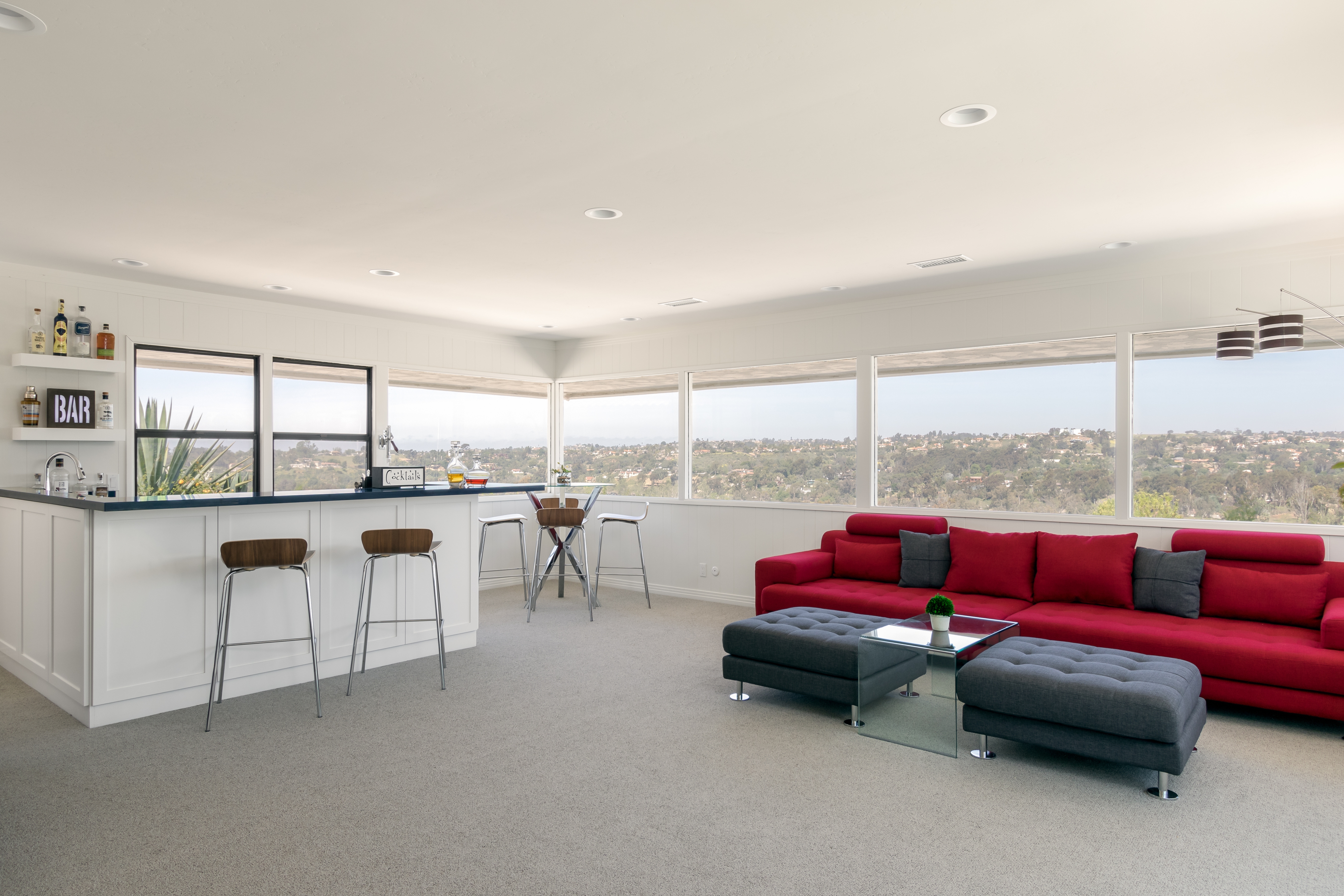
Shared kitchens work when everyone can find and reach what they use. Ask who needs pantry and refrigerator space, where everyday cookware lives and whether two cooks can use the counters at once. AARP HomeFit’s kitchen storage guidance suggests keeping everyday cookware within easy reach and giving a walk-in pantry good lighting and adjustable shelves. We apply those ideas selectively.
Also check laundry access that does not cross a bedroom, and think through work calls and visitor routes. These are planning questions, not a rule that every household needs a bigger kitchen. On one remodel, our designer needed the appliance specifications before electrical could be designed, because the laundry might need a 240-volt or a standard outlet and the sizing and spacing had to be known.
Living with adult children: benefits and drawbacks
Living with adult children can bring companionship, shared tasks and more time with grandchildren, and it can bring financial pressure, privacy compromises and unequal expectations. Pew’s fall 2021 survey of adults in the United States found parents split on money: 29% of parents living with an adult child said it helped their finances, and 28% said it hurt at least a little. That is national survey data, not San Diego evidence or a remodeling return.
Why older Americans and younger adults choose to live together
This living arrangement is not new, though the nuclear family became the norm for many households. Pew Research Center counted 59.7 million Americans living in a multigenerational household in March 2021, 18% of the population, and multigenerational living is increasing in popularity as housing markets stay expensive. San Diego County’s median owner-occupied home value was $854,700 for 2020 to 2024, according to the U.S. Census Bureau. The term covers several types of households, and families choose to live this way for reasons such as the rising cost of living, high housing costs, limited new housing and few housing options, changing family structure, caregiving needs, family traditions, a wish to keep the family together and, for some, the pandemic.
Benefits of multigenerational living for families
The benefits of multigenerational living are real. Together, families can share expenses and allocate chores, and it can open a path to more affordable housing in a county with high home prices. Family members can help with caregiving, meals and rides, and children can keep an eye on elderly family members who might otherwise feel isolated. Those benefits last when the household sets up the arrangement on purpose, so families can live and thrive together, and a layout that fits the family helps.
The drawbacks are just as real. One generation can end up subsidizing the other, noise and different schedules wear on privacy, and caregiving can fall on one adult child. Do not assume grandparents living in the home will provide child care or that adult children will supply elder care. Those expectations cause more friction than the floor plan does, which is why we ask about them before we draw.
Agree on household responsibilities before remodeling
Before remodeling starts, we encourage families to settle five decisions:
- Upfront remodeling contributions
- Recurring bills and chores
- Guests and quiet hours
- Voluntary care responsibilities
- What changes when someone moves out or needs more support
Treat this as an agreement between adults. Penn State Extension’s Creating a Home With Your Adult Child supports that approach, rather than treating an adult child as a guest or setting adolescent rules. AARP’s 6 Tips for Splitting Expenses in Multigenerational Households encourages discussing contributions before bills arrive. Ownership and equity questions belong with an attorney or tax adviser; we do not draft agreements.
What should you check before remodeling an inherited home?
Before remodeling an inherited home, confirm who has legal authority to approve work, whether the property tax exclusion applies and what deferred maintenance the house carries. Advisers and the County Assessor answer the first two. The third is where our team can help.
The County Assessor’s Parent to Child Exclusion page and the California BOE’s Proposition 19 guidance confirm that the exclusion is conditional, including a principal-residence requirement and a value limit. The one-year homeowners’ exemption requirement is separate from the exclusion-claim period, so contact the Assessor promptly. We cannot say whether an inherited assessment will stay unchanged.
Then compare three directions for the building:
- Reuse a suitable wing where the property already has workable rooms and services.
- Consider an addition where circulation or usable space falls short.
- Evaluate a permitted ADU where independent facilities matter most.
These are design decisions, not tax strategies. We start with deferred maintenance, such as roof, plumbing and electrical, because new space only helps if the existing structure can carry it.
How do we plan for aging parents and changing needs?
We plan a parent’s suite for how needs may change, not only how they look today. Check the arrival path, bedroom and bathroom access, lighting, shower use, door clearances and space for future help. Having family nearby does not replace necessary professional care.
On one ADU, the city treated the project as new construction and required a wider pocket door at the shower, from 2 feet 6 inches to 2 feet 8 inches, and our team discussed adding wall backing for future grab bars. Every property differs, so we size features to the person and the property.

Our guides to building an ADU for aging parents and aging-in-place remodeling in San Diego go room by room.
What affects the cost of adapting your home?
Cost follows the work, not the square footage alone. Moving plumbing, altering structure, adding a second kitchen and bath, adapting utilities, reaching the site and repairing existing conditions change the investment most. Ask what each budget category includes: design, engineering, approvals, construction and owner expenses.
A room that fits on paper can hide coordination. On one project, a new bathroom meant scoping the sewer with a camera, routing drainage around the floor joists and moving a medicine cabinet so the vent could run. We found those issues by investigating, and we would rather you know them before construction starts. We are not suggesting they changed that client’s price by any amount. The point is that hidden conditions, not room count, are what make one family’s budget differ from another’s.
We separate three numbers. A published planning range is a reference. A project-specific proposal reflects your drawings and selections. Your overall investment includes everything above plus what you spend outside our contract. The County ADU Handbook groups ADU costs into design, permitting, site and construction.
What do we check before drawing the remodel plans?
Before drawing, we confirm the household’s needs and what the property allows. Our sequence is short:
- Establish household needs.
- Document existing conditions.
- Identify jurisdiction and property constraints.
- Compare viable options.
- Coordinate design, selections and pricing.
Bring a list of who will live there and their routines, your independence priorities, any property records you have and your investment expectations. A complimentary consultation is a conversation. Professional design work is authorized through our Design Agreement, and construction is a later commitment.
Common questions about multigenerational living
What does living in a multigenerational home mean?
It means two or more adult generations share a home or property, sometimes called intergenerational living. Statistical definitions vary, but practically it is about who needs private space and what stays shared. The sections above show how families set that up.
Does every family need a second kitchen?
No. Many families share one kitchen and add private bedrooms and bathrooms. A second kitchen matters when households want independent routines, and it may make the space an ADU with its own rules.
Can the space serve a different purpose later?
Often, yes. A suite can become an office, guest room or caregiver’s room. Do not assume a private suite can become a rental dwelling; that requires the right permitted housing form.
Can living with family replace assisted living?
Sometimes, but not always, and every living situation differs. Family nearby does not replace professional care from a nursing home or home health provider. Prepare for support that may grow, and talk with a medical professional about what care someone needs.
Plan Your Multigenerational Remodel With Lars
A good design connects private space, shared routines and something we can actually build on your property. Bring your family’s priorities to a complimentary consultation and we will help you sort the options, starting with what your lot allows. Contact Lars Remodeling & Design to get started.