Aging in Place Remodeling Tips for Homes
01.

- Share this article
-

-

-

-

-

-

You’ve spent years creating memories in your home. It’s where you’ve hosted family gatherings, celebrated holidays, and built a life you love. But now, as you consider the future, you’re wondering how to adapt your cherished space to meet your changing needs.
Aging in place remodeling offers the perfect solution — allowing you to stay in the home you love while making thoughtful modifications for safety and accessibility as mobility changes occur. These updates don’t have to look institutional or change the character of your home. In fact, many aging-in-place remodeling projects can enhance your home’s style and value.
Raise the Outlets and Lower the Switches
One of the simplest yet most effective modifications is adjusting the height of your electrical outlets and switches. Outlets placed 18-24 inches from the floor reduce the need to bend down, while lowering light switches to about 48 inches from the floor makes them accessible from a seated position.
This change seems small but makes a huge difference in daily comfort, and it’s best to incorporate these changes during other electrical work to minimize disruption.
Use Wide Door Frames
Doorways in standard homes are often too narrow for walkers or wheelchairs, so widening door frames to at least 36 inches creates easy passage and prevents the frustration of getting stuck or bumping into frames.
While this might seem like a major renovation, an experienced aging in place remodeler can often widen doorways with minimal disruption to surrounding walls. If you’re not ready for a complete remodel, consider installing offset hinges which can add a couple of inches of clearance without modifying the frame.
Use Two Handrails
Staircases are one of the biggest challenges as mobility changes. Adding sturdy handrails on both sides of every staircase provides balanced support and helps prevent falls.
Don’t stop at just adding the rails — make sure they extend beyond the top and bottom steps and that they’re properly secured into wall studs or blocking. The peace of mind that comes from having something solid to grip as you navigate stairs is invaluable with aging in place remodeling, and this simple addition can dramatically reduce fall risk.
Install Pedal Controls or Lever Handles for Sink Faucets
Traditional faucet knobs can be difficult to grip and turn, especially for those with arthritis or decreased hand strength. Lever-style handles or pedal controls make kitchen tasks much easier.
Lever handles require only a push rather than a twisting motion, while foot pedals free up your hands entirely — perfect when you’re holding dishes or need to wash both hands.
Lower Cabinets and Countertops
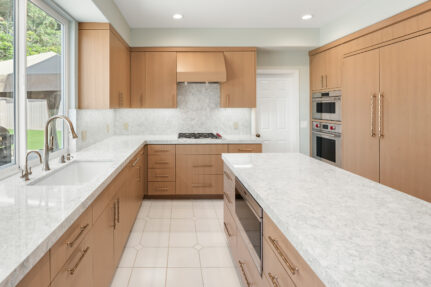
Standard kitchen designs often place important items out of comfortable reach. Lowering countertops in certain areas to 30-32 inches and installing pull-out shelves in cabinets brings everything within easy access.
Another helpful home modification is to install lighting under your cabinets or above your countertops so you can see what you’re doing, without straining.
Consider a multi-height kitchen design with some areas at standard height and others lower — perfect for seated meal prep or accommodating multiple users. Pull-down shelving systems and lazy Susans bring items from high cabinets down to you, reducing the need to stretch or climb.
Final Thoughts
Age in place remodeling isn’t about creating a clinical environment, but it’s about thoughtfully adapting your home to support your changing needs while maintaining its warmth and style. Whether you’re looking for kitchen remodeling services in San Diego or adding square footage, the best modifications seamlessly blend with your home’s design while offering practical benefits you’ll appreciate every day.
Your home should continue to be a comfortable haven that supports your lifestyle for years to come. With the right aging in-place remodeling decisions, you’ll create a space where you can live safely, independently and beautifully in the place you love most.