What 35 Years of Remodeling Teaches About Accountability
01.

- Share this article
-

-

-

-

-

-

After enough years in remodeling, you start to see the same problems repeat themselves, not because homeowners make bad decisions, but because the process isn’t built to prevent them.
Delays come from late selections. Budget overruns come from unclear scope. Communication breaks down without a system. And when multiple companies are involved, accountability gets diluted.
These aren’t random issues; they’re patterns.
Most remodels don’t go off track during construction. They go off track before it starts: when scope, cost, selections, and schedule aren’t aligned. Without that alignment, the build becomes reactive instead of predictable.
This is where experience matters.
Thirty-five years doesn’t just mean better craftsmanship. It means knowing where projects break down and building a process to prevent it. It means deciding early, documenting clearly, communicating consistently, and managing everything as one connected system.
At Lars, that’s the difference between good intentions and proven systems. Because accountability cannot begin after demolition, it has to begin long before construction starts.

TL;DR
- Long-term success in remodeling comes from accountability, not just craftsmanship.
- Accountability means: communicating clearly, owning mistakes, setting realistic expectations, and following through consistently
- Remodeling projects succeed when teams stay aligned from design through construction.
- Many remodeling frustrations happen because responsibilities become fragmented across vendors and subcontractors.
- Strong systems, communication rhythms, and process discipline reduce chaos and homeowner stress.
- Trust is built through transparency and consistency over time—not marketing promises alone.
Real Accountability Starts Before the First Day of Construction
The most accountable remodeler is not the one who reacts fastest when things go wrong. It is the one who reduces the chance of chaos before construction ever begins.
At Lars, accountability starts with discovery. Before plans are finalized or walls come down, the team works to understand the homeowner’s goals, lifestyle needs, budget comfort, timeline, feasibility, and expectations. This early alignment matters because a successful remodel depends on more than a beautiful design. It depends on everyone understanding what is being built, why it matters, what it will require, and how the process will unfold.
From there, the design phase turns ideas into clarity. Concepts become as-built plans, site plans, 3D renderings, material selections, scope details, and pricing. Instead of asking homeowners to imagine the outcome from vague descriptions, Lars helps them see and understand the project before construction begins.
This is also where documentation becomes accountability.
A well-run remodel needs:
- Coordinated drawings
- A detailed scope of work
- Material and product specifications
- Accurate schedules
- Clear sequencing plans
- Finalized selections
These details become the standard everyone works from. They help the homeowner, designer, project consultant, project manager, and build team stay aligned.
If a remodeler cannot clearly explain what will happen before construction starts, it is difficult for them to be accountable once construction begins. That is why Lars does not treat planning as a formality. It is the foundation for predictability, communication, and trust.
Accountability Is Easier When One Team Owns the Whole Process
One of the biggest sources of frustration in remodeling isn’t the work itself—it’s the gaps between the people doing the work.
In a conventional model, homeowners often find themselves coordinating multiple parties:
- Architect
- Interior designer
- General contractor
- Vendors and suppliers
- Trade partners
Each group plays a role, but no single team owns the entire outcome. And when responsibility is spread out, so is accountability.
Accountability gets weaker every time responsibility is handed from one disconnected party to another.
The design-build model is built to solve this.
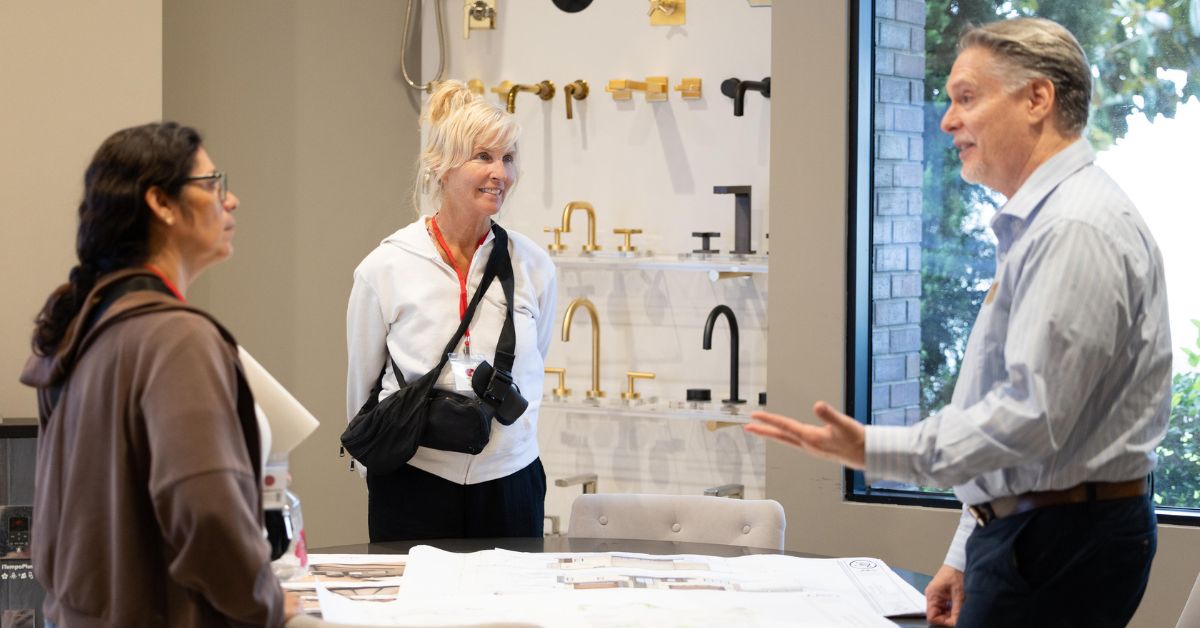
At Lars, architecture, interior design, estimating, permitting, project management, and construction are all integrated into one team, working under one process from the beginning. That structure directly supports accountability in a few critical ways:
- Fewer handoffs → fewer miscommunications
When one team is aligned from the start, information doesn’t get lost between phases. - Design and construction collaborate early
Decisions are made with real-world building implications in mind, reducing surprises later. - One team defines—and delivers—the project
The same people helping shape the vision are responsible for executing it. - Homeowners aren’t left coordinating the process
Instead of managing multiple vendors, the homeowner has a single, accountable partner.
This isn’t just about convenience. It’s about clarity.
When one team owns the full process, expectations are clearer, communication is more consistent, and there is no ambiguity about who is responsible for the result.
Why Selections, Scope, and Schedule Have to Work Together
One of the main reasons remodeling projects feel unpredictable is because key decisions are treated as separate pieces—when in reality, they are deeply connected.
A schedule is only as reliable as the decisions behind it.
At Lars, design, selections, scope, permitting, and scheduling are aligned before construction begins. That alignment is what turns a complex remodel into a predictable experience. When these elements are disconnected, problems follow. When they’re connected early, projects run smoothly.

Here’s how they work together:
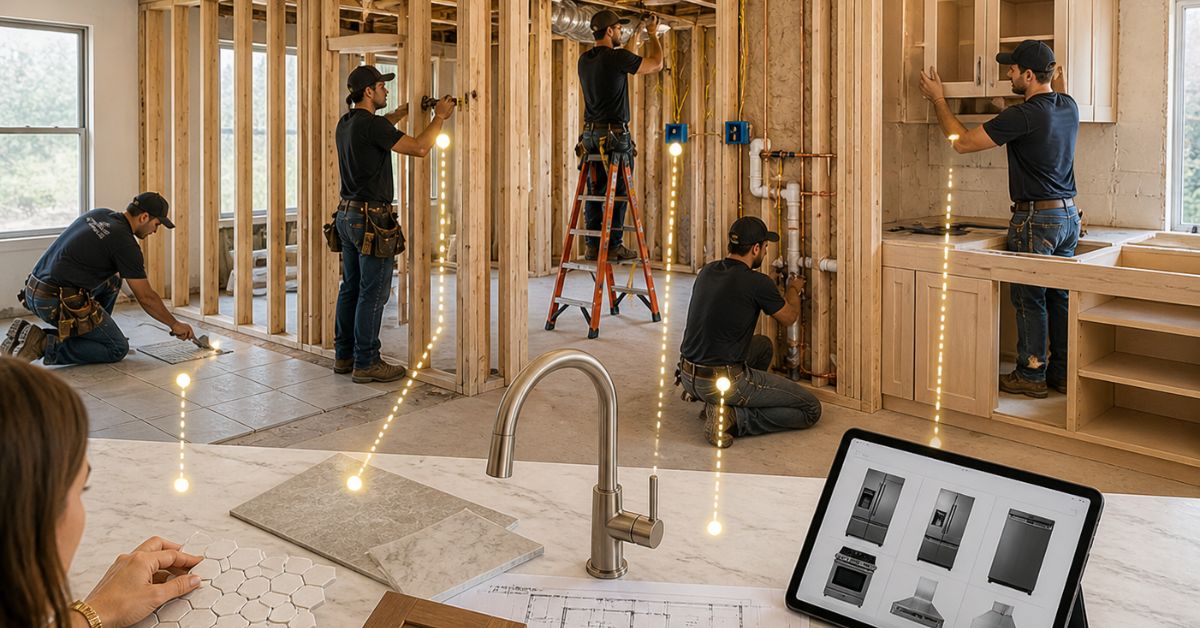
Selections affect construction
Every decision has a downstream impact:
- Tile choices affect installation time and sequencing
- Appliance selections impact electrical, plumbing, and ventilation
- Cabinet layouts influence framing and rough-in work
That’s why selections aren’t rushed. Through a guided design process—and with support from partners like Artisan West—homeowners choose from curated options with:
- Price-protected appliances
- Access to 30+ appliance brands
- Plumbing fixture guidance
- Seamless design integration
Scope affects budget
If scope isn’t clearly defined, the budget won’t be either.
Detailed plans and documentation ensure:
- What’s included is clear
- What’s not included is understood
- Pricing reflects real decisions—not assumptions

Permits affect timing
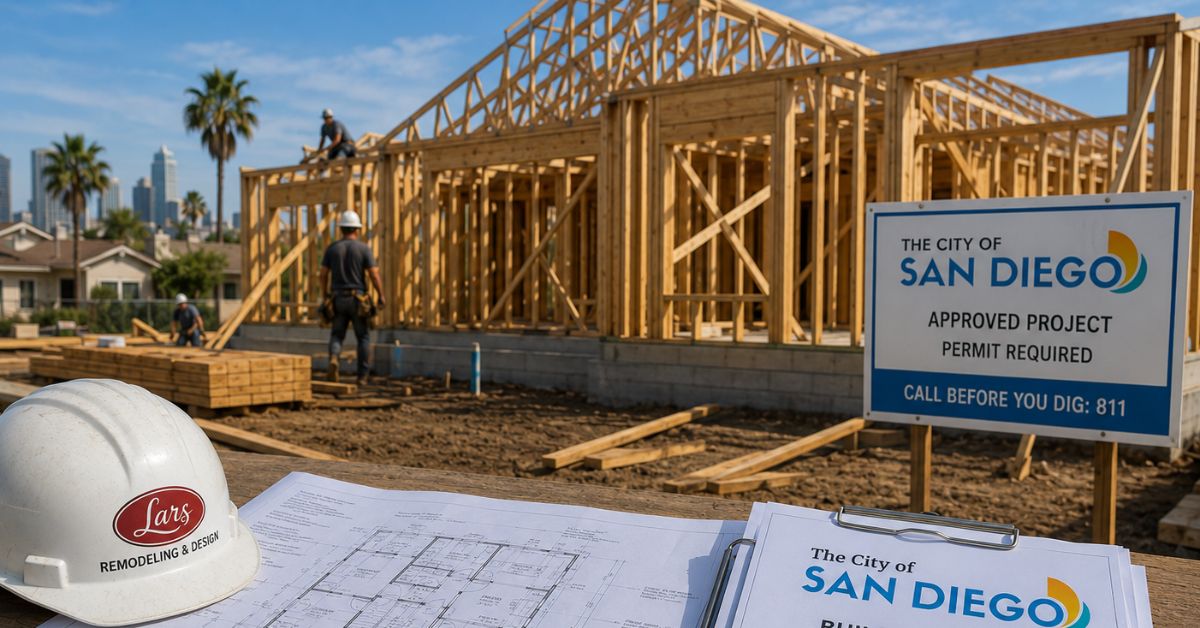
Permitting directly impacts the schedule.
Design decisions determine:
- What approvals are required
- How long they take
- When construction can begin
Schedules depend on locked decisions
A reliable schedule requires certainty.
That’s why Lars finalizes:
- Design plans
- Material selections
- Scope details
- Permits
before construction starts.
When selections, scope, and schedule are handled separately, homeowners feel the consequences later. Lars connects them early—so the schedule isn’t a guess, it’s a plan.

Accountability Has to Be Communicated, Not Assumed
Accountability isn’t just about what a company does behind the scenes—it’s about what the homeowner can see, understand, and trust throughout the process.
One of the biggest fears homeowners have during a remodel is being left in the dark. Even when a project is on track, a lack of communication can make it feel uncertain.
A remodel can be on track and still feel stressful if the homeowner does not know what is happening. That is why communication is not a courtesy; it is part of accountability.
At Lars, communication is built as a system, not left to chance.
Homeowners are consistently informed through a structured rhythm:
- What happened: progress from the previous week
- What’s happening now: current work and active tasks
- What’s coming next: upcoming steps and decisions
This is supported by:
- Daily logs and updates through BuilderTrend
- Weekly “Last / This / Next” reports
- Clear schedule visibility and milestone tracking
A dedicated Project Manager serves as the single point of contact, ensuring there is always clarity around responsibility and next steps.
This structure does more than share updates—it reduces stress during the most disruptive phase of the project. When homeowners have visibility, they don’t have to guess, chase updates, or wonder what’s next.
And that’s what builds trust.
Because accountability isn’t just about doing the work—it’s about making sure the homeowner feels confident in every step along the way.

Why Lars Can Stand Behind an On-Time Completion Guarantee
The On-Time Completion Guarantee exists to solve one of the biggest homeowner concerns: timeline uncertainty.
But it’s important to understand—this isn’t a marketing promise. It’s a reflection of the system behind it.
As our team at Lars puts it: “Trust isn’t built through words. It’s built through accountability.”
For qualifying projects, once permitting is approved and all selections are finalized, Lars establishes an actual start date and defines a guaranteed project duration through final inspection. That timeline is not a rough estimate—it’s a commitment, backed by clearly defined terms.
And if Lars misses that completion date for reasons within its control, the guarantee includes compensation—$200 per day, capped at 5% of the contract value (subject to the full terms and exclusions of the agreement).
That level of accountability is only possible because of how the process is built:
Plan clearly
Before construction begins, everything is aligned:
- Design plans are finalized
- Material selections are locked
- Scope of work is clearly defined
- Costs are established
- Permits are in place
- The schedule is built on real decisions, not assumptions
Build predictably
During construction, execution is controlled through:
- Dedicated Project Manager oversight
- Structured scheduling and sequencing
- Proactive communication and weekly updates
- Coordinated teams working from the same plan
Finish on time
With the right inputs and disciplined execution, the timeline becomes reliable—not theoretical.
This is the same framework shared in Educate Before You Renovate™: Plan Clearly. Build Predictably. Finish On Time.
The guarantee is simply the proof.

After 35 Years, Accountability Means Building the System to Deliver
Trust isn’t built by saying “we care” or “we communicate.” It’s built when every step of the process is designed to reduce uncertainty and protect the outcome.
At Lars, the focus isn’t just the finished space—it’s how the project is defined, communicated, and delivered from start to finish.
That’s why the process is built around:
- Structure that removes guesswork
- Predictability that reduces stress
- Guidance that keeps homeowners informed and confident
This approach doesn’t come from chasing speed or volume. It comes from decades of refining what works—and eliminating what doesn’t.
Lars is built for:
- Consistency across every phase
- Clear expectations from the start
- Long-term trust and reputation
Thirty-five years of experience has shaped systems that make accountability real—not just promised.
Because in remodeling, trust isn’t built all at once. It’s built step by step, through a series of promises kept along the way.

Learn What Accountability Should Look Like Before You Sign
Before you commit to a remodeling project, the most important thing you can have isn’t a design—it’s clarity.
Homeowners deserve to understand what accountability really looks like before they choose a contractor. That means knowing the right questions to ask about timelines, budgets, scope, permits, communication, and how a company takes responsibility from start to finish.
That’s exactly why Lars created Educate Before You Renovate™.
This free workshop is designed to help you:
- Understand how a well-structured remodeling process should work
- Learn how to evaluate contractors with confidence
- Avoid common pitfalls that lead to delays, budget creep, and frustration
- Make informed decisions before signing a contract
There’s no pressure—just practical guidance to help you feel prepared.
Before you sign a remodeling contract, know what accountability should look like. Join us at Educate Before You Renovate™ so you can move forward with clarity and confidence.