How AI & Smart Technology Are Transforming Professional Home Remodeling in 2026
01.
- Share this article
-

-

-

-

-

-

TL;DR:
Artificial intelligence is rapidly changing how professional remodeling firms design and plan projects. In 2026, AI is being used by architects, interior designers, and design-build teams to enhance visualization, accelerate planning, and deliver more precise home renovation results.
Key Takeaways:
- Professional designers now use AI-assisted tools to visualize layouts, paint colors, and design styles before construction begins.
- AI-assisted floor plan development and digital modeling help design-build teams plan renovations more efficiently.
- AI enhances collaboration between homeowners and interior designers.
- Smart automation is now integrated into modern home renovation projects.
- AI improves visualization and planning—but expert craftsmanship and professional remodeling teams remain essential.
Home remodeling in 2026 looks dramatically different than it did just a few years ago. Automation, integrated smart systems, and artificial intelligence are reshaping how homeowners approach renovation projects. From concept development to construction scheduling, AI-driven tools are streamlining everything from the initial floor plan to final material selections.
If you’re planning a luxury home renovation, understanding how AI is influencing modern remodeling can help you make smarter decisions—without sacrificing craftsmanship or design integrity.
Let’s explore how professional remodeling teams are using AI and smart technology to improve design accuracy, planning efficiency, and the overall remodeling experience.
The Rise of the AI Home Remodel
The concept of the AI home remodel is gaining traction as homeowners look for more efficient ways to visualize and plan projects. AI-powered software can now generate layout ideas, simulate lighting conditions, suggest complementary paint colors, and even recommend cohesive design styles based on your preferences.
In professional remodeling environments, artificial intelligence acts as a powerful design assistant—helping architects and interior designers quickly explore possibilities while maintaining full creative control. It allows professionals to test multiple concepts quickly and present clients with refined options before construction begins.
Today, design-build firms frequently use AI-powered modeling to create detailed 3D visualizations so homeowners can experience their future space before the first wall is opened.
The result? Better-informed decisions and fewer costly changes during the build phase.
How Professionals Use AI for Home Design
In modern remodeling firms, AI is increasingly used to support professional design workflows.
AI tools can analyze your lifestyle needs, square footage, and aesthetic preferences to generate layout concepts for living rooms, kitchens, and primary suites. You can upload inspiration photos, and AI software can interpret those images to suggest finishes, materials, and complementary design elements.
Design teams often use these tools to quickly test multiple design directions—from modern minimalism to Mediterranean-inspired interiors—before narrowing down the final concept.
However, while AI is powerful, it’s most effective when paired with human expertise. Professional designers refine AI-generated ideas to ensure they’re structurally feasible and aligned with your home’s architecture.
How to Use AI to Remodel a House
In professional remodeling, AI tools are used as planning accelerators—helping design teams explore ideas quickly while ensuring construction feasibility.
AI can help with:
- Visualizing new layouts and adjusting a floor plan
- Testing different cabinetry configurations
- Exploring various design styles
- Previewing furniture placement in updated living rooms
- Simulating lighting throughout the day
These tools provide clarity during the planning phase of a home renovation, helping homeowners see possibilities before committing to construction.
While AI assists with planning and visualization, the construction process still relies on experienced architects, designers, project managers, and skilled craftsmen.

AI-Enhanced Visualization in Remodeling
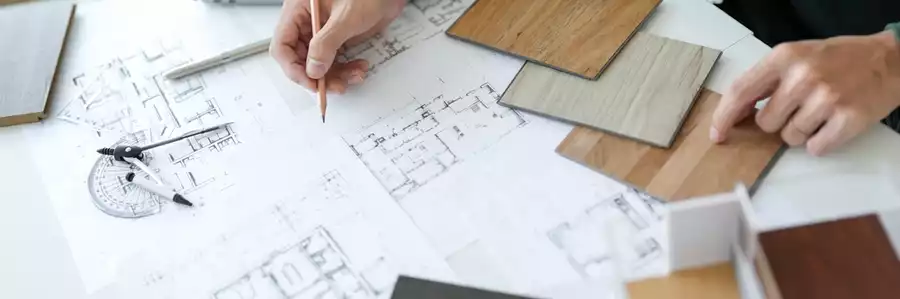
AI visualization technology has become an increasingly valuable tool for professional design-build teams. In 2026, AI platforms are capable of scanning existing spaces and creating digital twins of your home. These 3D models allow you to experiment with wall removals, layout adjustments, and window placements before any demolition begins.
This is especially helpful when evaluating structural changes. Instead of guessing how an open-concept layout will affect flow between living rooms and kitchens, AI simulations provide realistic previews.
It also improves collaboration between homeowners and interior designers, ensuring everyone shares a clear vision of the final outcome.
AI as a Planning Accelerator in Remodeling
Another growing trend is exploring how professional remodeling teams use AI to streamline renovation planning and budgeting.
AI-powered project management tools can:
- Estimate timelines based on historical data
- Flag potential scheduling conflicts
- Track material availability
- Analyze cost trends
This predictive capability reduces delays and improves accuracy in budgeting. When integrated with a design-build firm’s internal systems, it strengthens accountability and communication throughout the remodeling process.
Still, AI works best when paired with experienced professionals who understand local permitting requirements, building codes, and construction sequencing.
Smart Home Automation in 2026
Beyond planning, automation itself is redefining luxury living.
Smart homes in 2026 integrate:
- Voice-controlled lighting and climate systems
- Automated window treatments
- Intelligent security systems
- Energy-efficient monitoring
- Adaptive lighting that shifts based on time of day
These technologies are no longer add-ons—they’re integrated during the design phase of a home renovation. Wiring, device placement, and system controls are incorporated into the architectural strategy from the start.
This is where a comprehensive home design approach matters. Integrating automation into your renovation requires coordination between designers, electricians, and technology specialists.
AI + Design-Build: The Ideal Combination
While AI tools are widely available, the most successful projects combine artificial intelligence with a design-build team.
An experienced remodeling firm understands how to:
- Interpret AI-generated layouts realistically
- Validate structural feasibility
- Align digital concepts with real-world construction methods
- Preserve architectural integrity
AI can generate ideas quickly—but it cannot replace the nuanced expertise of seasoned architects and interior designers.
In luxury remodeling especially, the goal isn’t just efficiency—it’s refinement. AI supports that refinement, but human craftsmanship delivers it.
The Future of Remodeling
As we move further into 2026, the integration of artificial intelligence in remodeling will continue to expand. Homeowners will have more tools at their fingertips than ever before.
The key takeaway is simple: AI enhances professional remodeling—it doesn’t replace the expertise behind it.
When used by experienced architects, designers, and builders, AI becomes a powerful visualization and planning tool that improves the remodeling process from concept to construction.
AI provides insight. Designers provide vision. Builders provide execution.
Together, they create homes that are not only smart—but beautifully designed, thoughtfully constructed, and built to stand the test of time.