Home Remodeling Financing Options: A San Diego Homeowner’s Guide
01.
- Share this article
-

-

-

-

-

-

You might know exactly what you want to change about your home. A kitchen where everyone can gather without getting in each other’s way. A bathroom that feels easier to use. Or a floor plan that finally makes sense for the way your family lives today. Then comes the practical question: how will we pay for it?
There is no single answer for every homeowner. Home remodeling financing options range from savings to home equity borrowing, personal loans, and specialized renovation loans. Understanding how each type of loan works, and how it connects to a realistic budget for your home improvement project, can help you move forward with more clarity and less pressure. If you are still estimating costs, our San Diego remodeling cost guide is a useful place to start.
In short: Start with the changes that matter most, develop a realistic scope, and compare options based on total cost, payment comfort, and risk, not simply the amount a lender is willing to approve. You do not have to choose a loan before you begin learning what your remodel may involve.

What are your home remodeling financing options?
The six main ways to finance a home remodel are cash or savings, a home equity loan, a home equity line of credit (HELOC), a cash-out refinance, an unsecured personal loan, and a renovation mortgage such as FHA 203(k) or Fannie Mae HomeStyle Renovation, with construction loans and credit cards covered below for very large or very small jobs. Many homeowners combine two of these home improvement financing options, or complete work in phases. There is no best financing choice for everyone: your available equity, current mortgage rate, income, savings, and project scope all affect which approach deserves a closer look.
| Option | How it works | Home as collateral? | Question to ask |
| Cash or savings | No loan, interest, or fees | No | What emergency savings remain after paying for the work? |
| Home equity loan | Lump sum, usually at a fixed rate with set payments | Yes | What are the APR, fees, payments, and consequences of missed payments? |
| HELOC | Revolving line of credit, usually at a variable rate | Yes | How could payments change when rates rise or the draw period ends? |
| Cash-out refinance | Replaces your existing mortgage with a larger one | Yes | What happens to the rate and total cost of your entire mortgage? |
| Personal loan | Installment loan, typically unsecured | Usually no | How do the rate, loan term, and monthly payment compare? |
| Renovation mortgage (FHA 203(k), HomeStyle) | Purchase or refinance loan that includes improvement costs | Yes | What contractor, appraisal, inspection, and draw rules apply? |
Choosing the right financing starts with understanding these trade-offs, so use this overview to frame a conversation with a qualified lender or financial advisor. Loan structures and underwriting vary by lender, so treat these as common features, not a guarantee of any particular offer.
Paying for home improvements with cash or savings
Paying with savings avoids interest, closing costs, and a monthly payment, which makes it the simplest way to pay for home improvements. The trade-off is liquidity: keep enough in reserve for emergencies and for surprises during construction. Some homeowners use savings to fund home design fees and early costs, then finance the rest.
Personal loans and home improvement loans
Many lenders market personal loans for home improvement, and most personal loans are unsecured. Unlike home equity financing, an unsecured loan does not use your home as collateral, so approval is usually based on credit and income rather than a home appraisal. Compared to secured loans, they typically come with a higher interest rate, a shorter term, and a smaller loan amount, which can make them a better fit for a modest bathroom update or home repair than a whole-home renovation.
Construction loans for larger renovation projects
A construction loan is a short-term loan for major work such as additions, extensive structural changes, or a rebuild. The lender releases money in draws as work is completed and inspected, and the loan is often converted into or replaced by a permanent mortgage when the project is finished. Expect detailed plans, a contractor agreement, and a budget before approval.
Credit cards and promotional offers
Credit cards and promotional offers can cover small purchases, but they are rarely a good fit for a large remodel. With a deferred-interest offer, if any balance remains when the promotional period ends, interest can be charged back to the original purchase date, so read the terms carefully before using either option for renovation costs.

How does a HELOC compare with a home equity loan?
The main difference is how you receive and repay the money. Home equity loans typically pay one lump sum at a fixed interest rate with set monthly payments, while a home equity line of credit (HELOC) is a revolving line of credit you draw from as needed, usually at a variable interest rate, during a draw period and then repay during a repayment period.
Both let you borrow against the equity in your home, which is the difference between the value of your home and what you still owe on your mortgage. Lenders commonly cap total borrowing at a percentage of the home’s appraised value, so ask each lender what limit applies to you. Because both are secured by your home, these products often carry a lower interest rate than unsecured borrowing. The trade-off is that the Federal Trade Commission warns that failing to repay can mean losing your home to foreclosure.
A HELOC for home renovation can be useful when expenses happen over time, such as design fees first and construction payments later, because you pay interest only on what you draw. A home equity loan provides a predictable payment, which may suit a homeowner who already knows the total loan amount. Either way, compare the APR, closing costs, and any annual fees on each loan option you are considering.
HELOC flexibility also comes with decisions about how much to draw and when. Because HELOCs typically have variable interest rates, monthly payments may increase when rates rise. Payments can also increase significantly when the draw period ends and the repayment period begins. Depending on the loan terms, some HELOCs may require a large balloon payment. Ask lenders to model a higher-rate scenario and the payment you could face later, not only the introductory payment.
Taxes may also factor in. Under IRS Publication 936, interest on home equity debt is generally deductible only when the funds are used to buy, build, or substantially improve the home that secures the loan. Ask a tax professional how that rule applies to your remodel.
For a neutral comparison of these two products, read the Consumer Financial Protection Bureau’s home equity loan and HELOC guide.

When might a cash-out refinance or renovation loan make sense?
A cash-out refinance tends to make the most sense when a new mortgage rate is close to or below your current rate, because it replaces your entire mortgage, not just the remodeling portion. Because the new loan is based on your current home value, you can receive part of your equity in cash at closing. If your current mortgage has a favorable rate, compare the new rate, closing costs, and total interest over the life of the new loan before deciding.
Renovation loans suit homeowners who want to purchase a home that needs significant work, or refinance one, because they can finance both the purchase or refinance and the improvements in one home loan. The two best-known types of home renovation loans are:
- FHA 203(k): A government-backed loan insured by the Federal Housing Administration. HUD’s FHA 203(k) program offers a Limited 203(k) that can finance up to $75,000 of repairs and improvements with a home purchase or refinance, and a Standard 203(k) for major rehabilitation (the property must stay within the area’s FHA mortgage limit), with funds released in stages after inspections.
- Fannie Mae HomeStyle: A renovation option built on conventional loans rather than government insurance. Fannie Mae HomeStyle Renovation rolls renovation costs into a purchase or refinance mortgage and can cover nearly any part of the home.
Because home renovation loans work from a scope of work and an appraisal of the home’s value after improvements, the lender will review contractor bids and plans before closing. Ask how and when funds are released, and whether that schedule fits the work you are planning.
If your question is specifically about applying, see our guide on how to get a home renovation loan.

How do you finance a kitchen or bathroom remodel?
Kitchen remodel financing and bathroom remodel financing use the same tools as a larger project: savings, home equity borrowing, a personal loan for smaller scopes, or a renovation mortgage. What changes is the amount, which depends on the type of home improvement you plan. Replacing cabinetry or fixtures costs far less than moving plumbing, removing walls, upgrading electrical systems, or improving accessibility, so define the scope before you choose a loan size. For a smaller kitchen remodel or bathroom refresh, savings or an unsecured loan may be enough. For a renovation project that moves walls, plumbing, or electrical, homeowners more often compare a home equity loan or HELOC with a cash-out refinance.
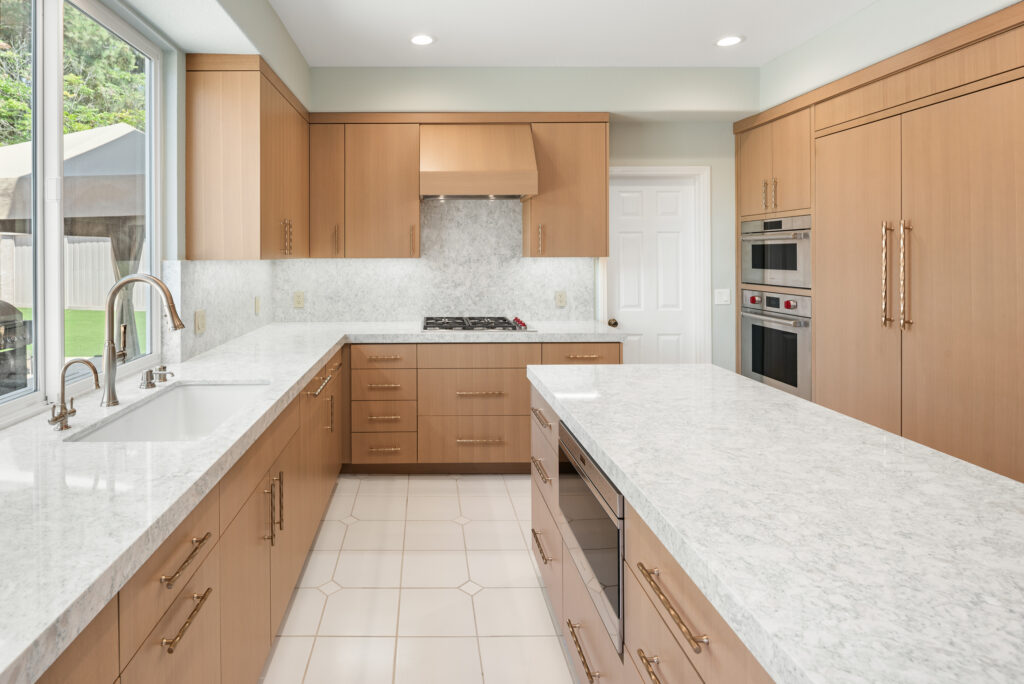
Imagine a kitchen that feels too crowded at dinner. What starts as a wish for new cabinetry might become a plan to improve the flow between the kitchen and living area. Before choosing how much to borrow, explore which improvements will make daily life better, what construction they require, and what they are likely to cost. Our San Diego kitchen remodeling team starts with exactly those questions.
The same goes for a bathroom: a curbless shower, better lighting, or more practical storage might be worth prioritizing over features that look beautiful but do little to solve the underlying problem. If you are weighing a bathroom remodel, plan a project that fits the way you use your home, not simply the size of your loan approval.
How much should you borrow for a home remodel?
Borrow based on a monthly payment your household can comfortably carry, not the lender’s maximum loan amount. Start with a realistic construction estimate, add a separate reserve for unforeseen conditions, then add loan fees, permits, and any temporary living costs. Your payment still needs to leave room for everyday expenses, savings goals, and unexpected life events.
For San Diego context, our cost guide breaks down typical price ranges by project type, from kitchen refreshes to whole-home reconfigurations. Local requirements also belong in the budget: the City of San Diego requires permits for work such as remodeling and repairs to electrical, mechanical, and plumbing systems, and permit fees and review time can affect both cost and schedule. In older homes especially, opening walls can reveal conditions no one could see during the estimate.
For example, imagine an entirely hypothetical remodel with a working construction budget of $120,000. A separate 10% planning reserve adds $12,000 before any loan fees or temporary living costs. The percentage is only an illustration, not a standard contingency for every property. Your actual reserve should reflect the project, site conditions, and advice of your remodeling and financial teams.
Before choosing a borrowing amount, ask yourself:
- Which changes matter most, and which could wait?
- What is included in the estimate, and what selections or conditions remain unresolved?
- Could we comfortably manage the payments if rates or household expenses rose?
- Are loan fees, inspections, permits, and any temporary living costs accounted for?
- Would a smaller scope or different timeline feel better for our household?
It is perfectly reasonable to discover that the best decision is to scale back, plan in phases, or wait. We would rather help you identify a project that feels right than encourage one that creates financial strain.

Why does planning matter before you commit to financing?
Planning first tells you how much to borrow, when you will need the money, and which of the home renovation financing options above fits the way construction is paid. Without a developed scope, it is easy to borrow too little and face a gap mid-project, or borrow too much and carry interest you did not need.
Lars Remodeling & Design is a San Diego design-build firm, which means one team connects the layout, selections, estimating, and construction planning. Our Design & Feasibility process gives homeowners an opportunity to explore options and understand how choices affect the investment before making a separate construction commitment. That does not eliminate uncertainty, but it creates a stronger basis for deciding what to fund. Learn more about what design-build remodeling means and how scope, budget, and construction decisions come together, especially on larger whole-home remodels where several rooms and systems change at once.
You can speak with lenders early to understand possible terms. Just be cautious about treating an early conceptual idea as a final construction price. Ask when an approval expires, whether the lender requires completed plans, and how changes to scope or timing might affect your funds.
What should you ask a lender before choosing financing?
Ask every lender the same set of questions so you can compare written offers side by side, not just headline interest rates:
- Is the interest rate fixed or variable, and what is the annual percentage rate (APR)?
- What are the total origination, appraisal, closing, annual, and other applicable fees?
- When will funds be available, and are construction draws or inspections required?
- Does the loan affect my existing mortgage or require using my home as collateral?
- What would my payment look like if rates rose or a HELOC entered repayment?
- What happens if the remodeling scope, completion date, or household finances change?
A financial advisor or loan officer can help you choose the right loan for your situation. Lars does not provide lending or individualized financial advice; our role is to help you plan a remodeling project with a clearer picture of its scope and investment.

Frequently asked questions about remodeling financing
Can I finance a home remodel without refinancing my mortgage?
Yes. A home equity loan, HELOC, or personal loan can fund a remodel while leaving your existing first mortgage in place. Availability, rates, and limits depend on your equity, credit, income, and the lender’s terms.
How can I finance a home remodel without equity?
Homeowners with little equity in their home typically use savings, an unsecured personal loan, phased construction, or a renovation mortgage such as FHA 203(k) or Fannie Mae HomeStyle, which can lend based on the home’s expected value after improvements. Unsecured personal loans often carry higher rates and lower limits than home equity borrowing, while renovation mortgages add contractor, appraisal, and draw requirements, so compare APR, fees, and total cost carefully.
Should I have a remodeling estimate before applying for financing?
It helps. You can explore borrowing options early, but a developed scope and realistic estimate make it far easier to decide how much funding is appropriate. Renovation mortgage programs such as FHA 203(k) also require contractor bids or a work write-up before closing.
What if my renovation costs more than expected?
Your loan usually will not grow automatically, so plan for overruns before construction starts. Ask your remodeling team how unforeseen conditions and requested changes are documented and priced, and ask your lender whether additional funds would be available and on what terms. A separate reserve is the most reliable buffer.
Is financing a home remodel worth it?
Financing a remodel can be worth it when the payment fits comfortably in your budget and the project solves real problems in how you live. A remodel can make daily life more comfortable and functional, but resale gains are not guaranteed. The right decision is one you feel good about after considering the full cost, the risks, and the alternatives, including waiting or reducing scope.
Plan your home remodel with confidence
You do not need a completed design or a loan decision to begin asking questions. Bring us the rooms that are not working, the changes you hope to make, and the investment that feels responsible for your household. We can help you explore what may be possible, understand the design and construction decisions ahead, and decide on a next step without rushing the conversation.
When you are ready, book a Complimentary Consultation with Lars Remodeling & Design. Our goal is to help you make a thoughtful decision about your home, even if that means taking more time before starting a project.
Helpful resources on home equity and renovation loans