JADU vs ADU: Which Accessory Dwelling Unit Fits Your Property?
01.
- Share this article
-

-

-

-

-

-

An ADU is an independent home on the same property as a main residence. A JADU occupies up to 500 square feet of interior livable space within a single-family home, including an attached garage.
ADU vs JADU: terms at a glance
| Term | What it means | Picture it this way |
| ADU | Accessory dwelling unit: a home with its own cooking, bathroom, living and sleeping facilities. | A second home on the same lot as a primary home. |
| Detached ADU | An ADU in a separate building. | A backyard cottage with its own kitchen and bathroom. |
| Attached ADU | An independent unit connected to the primary home. | An addition attached to a single-family home. |
| Garage conversion | A construction method. The finished space may qualify as an ADU or, in an eligible attached garage, a JADU. | A former garage redesigned for living. |
| JADU / junior ADU | Junior accessory dwelling unit: up to 500 square feet within the home, with an efficiency kitchen and separate entrance. Its bathroom may be private or shared. | A compact unit within the existing or proposed house. |
These terms follow California’s dwelling definitions and JADU requirements.
Picture three possible layouts:
- A backyard home for a parent: A separate building with a kitchen and bathroom is a detached unit, even if the family calls it a granny flat.
- A 450-square-foot space inside the house: With the required kitchen, entrance and bathroom access, it could qualify as a JADU.
- A converted garage: A detached garage can become an ADU. If you convert an attached garage, the space may qualify for either category, depending on the design and approvals.
These layouts illustrate the categories; the homeowner experiences below come from our remodeling work.
What is ADU in real estate?
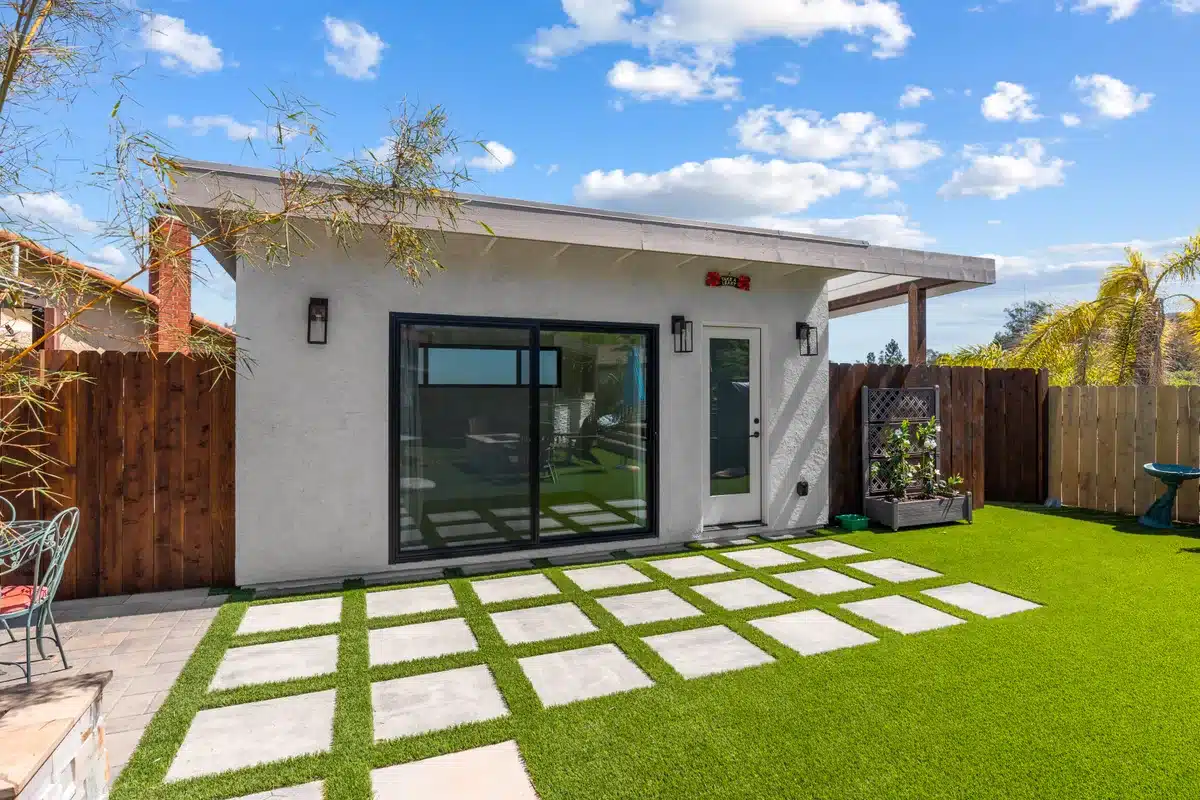
In real estate, ADU means accessory dwelling unit: a housing unit with complete independent living facilities on a lot with an existing or proposed primary residence. An ADU can be attached, detached or created by converting existing space. Independence describes how someone lives there, not whether the building stands alone.
Listings use names such as granny flats, casitas and in-law suites. Those labels don’t establish approved use. Before treating the space as a rental unit, check the permit record and approved plans. A bedroom with a bathroom alone does not establish ADU status.
If you want to generate rental income, confirm the unit’s legal use and rental restrictions before building your budget around it. If resale matters, ask an appraiser how the proposed improvement would affect your property value.

What is an ADU home?
An ADU home is a self-contained home with its own cooking and bathroom facilities, plus space for living and sleeping. California’s definition concerns those independent living facilities, so an ADU can be a studio. A separate bedroom is not what defines it.
Our ADU design starts with how both households will use the property. Where will someone enter? Can they reach the yard without crossing your patio? Will bedroom windows face each other? These questions belong in the design discussion before you settle on a floor plan.
Independent living does not always mean separate utilities. On one of our remodeling projects involving an ADU, shared water lines meant that shutting off water for the work would also interrupt service to another occupied home. We recommend checking those connections alongside entrances and privacy.

What is a JADU?
A JADU is a small dwelling within an existing or proposed single-family residence, including an enclosed attached garage. A JADU is limited to 500 square feet of interior livable space. Its required efficiency kitchen includes cooking appliances, a food-preparation counter and storage suited to the unit.
A JADU can share a bathroom with the main house or have its own bathroom. With shared facilities, the JADU must have an interior entrance to the main living area as well as its separate entrance.
The bathroom also affects owner occupancy. Under California’s 2026 JADU rules, the property owner must live in either the main home or the JADU when sanitation facilities are shared. With separate sanitation facilities, these rules do not require the owner to live on the property.
A private bathroom does not automatically turn a qualifying JADU into a full ADU. The permitted category still matters.
For a JADU in California, rentals must last longer than 30 days. State law also requires a deed restriction preventing sale of the junior unit separately from the house.
What is ADU in construction?
In construction, ADU describes the dwelling being created. ADU construction might involve a new building, an addition or a conversion. At Lars, our design and feasibility work examines the existing home and proposed changes together. Square footage alone tells you little about the construction cost.
ADUs and JADUs: what causes the cost difference?
A detached build needs its own foundation and exterior structure. A JADU uses space within the house, but creating a kitchen, bathroom access and separation can still require substantial work. A garage conversion starts with a structure that may need foundation, moisture, insulation or ceiling-height corrections.
When we assess existing structures, we look at what can stay and what must change to meet the building code. Turning existing space into a JADU may mean opening walls to update plumbing and wiring, even when the layout looks straightforward.
After more than 35 years remodeling San Diego homes, we know to check beyond the new living space. On one of our ADU projects, our permitting team investigated whether sprinkler demand and plumbing fixture counts would require a larger water meter and a right-of-way permit for work in the public street or sidewalk area.
We planned a site visit with our plumbing contractor to check whether the new water line could pass beneath the sidewalk without removing it. The unit’s floor plan couldn’t answer that question.
Utility trenching is the digging needed to run underground services. We recommend showing that work separately from piping and connections, meter or electrical-panel work, permit fees, and the cost to repair pavement or landscaping afterward.
Compare the complete work each property needs before deciding which option costs less. Our San Diego ADU costs and financing guide explains the broader budget considerations.
What is a junior ADU?
Junior ADU is another name for JADU, rather than a separate housing category. It can suit a household comfortable placing the new living space within the main house. JADUs can share bathrooms, but that arrangement gives everyone less privacy and affects the owner-occupancy requirement.
The difference between an ADU and a JADU becomes practical when you consider who will live there. Visiting family, a parent moving in permanently and a long-term tenant may need different layouts. If you want living space for family close by, discuss how much daily contact everyone actually wants.
Can you build both an ADU and a JADU?
Yes. California law allows a qualifying combination of one ADU and one JADU under its combined-unit provisions. If a JADU exists in the house already, ask about eligibility for a detached unit during feasibility review.
What is a junior accessory dwelling unit?
Junior accessory dwelling unit is the full legal name for a JADU. It is the term you will encounter on plans and permit documents. Once you understand the vocabulary, confirm which agency reviews your address.
City of San Diego ADU regulations apply within the City; County guidance addresses unincorporated areas. Other California cities handle their own reviews. Zoning, coastal location, fire requirements, septic systems and utility capacity can affect the work your property needs.
The California Department of Housing and Community Development handbook explains the statewide framework for building an ADU in California. Use it alongside current law and the guidance for your jurisdiction.
California law gives agencies 15 business days to determine whether ADU and JADU applications are complete. The 60-day approval-or-denial period begins with a complete application where a qualifying home already exists: single-family or multifamily for an ADU; single-family for a JADU.
New-house applications and applicant-requested delays have separate conditions. These statutory review periods do not measure total permit or project duration. Our San Diego ADU rules and planning guide explains the next steps in the ADU process.
Rules checked September 16, 2026.
Talk With Lars About Your ADU
Not sure whether an ADU or JADU is right for you? Bring your address, goals and any existing floor plans to our San Diego ADU builders. We can help you compare the space, privacy and construction work each option involves. Schedule an ADU consultation with Lars to discuss the design, utilities and permitting for an option that fits your property and budget.