Home Remodel Budget: How Much Should You Actually Spend?
01.
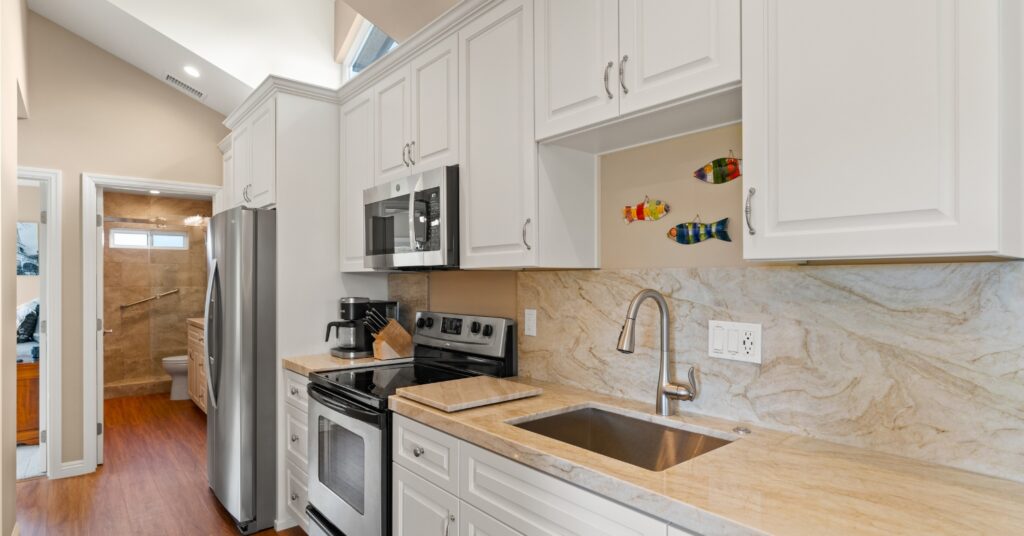
- Share this article
-

-

-

-

-

-

Most homeowners should keep total renovation spending under 30% of their home’s current market value. On a $900,000 San Diego home, that’s a $270,000 ceiling across every project combined. Individual rooms carry tighter guidelines than that, and the bigger risk usually isn’t spending too much overall. It’s spending too much relative to the houses around you.
Renovation costs vary widely by project type, and a realistic home renovation budget starts with knowing which of these guidelines actually applies to your situation.
Key Takeaways
- The 30% rule: cap total renovation spending at 30% of your home’s current market value. A $150,000 budget on a $500,000 home is the outer edge, not a target.
- Kitchens run 5–15% of home value (the National Kitchen & Bath Association suggests 15–20% for a full overhaul); bathrooms run 5–10%.
- Your real ceiling is your neighborhood, not your bank account. Post-renovation value shouldn’t exceed the highest comparable sale nearby by more than 5–10%.
- Best-performing upgrades in the : garage door replacement (267.7% recouped), steel entry doors (216.4%), a minor kitchen remodel (112.9%).
- Hold back 10–20% contingency on a standard home, 20–30% if it predates 1980.
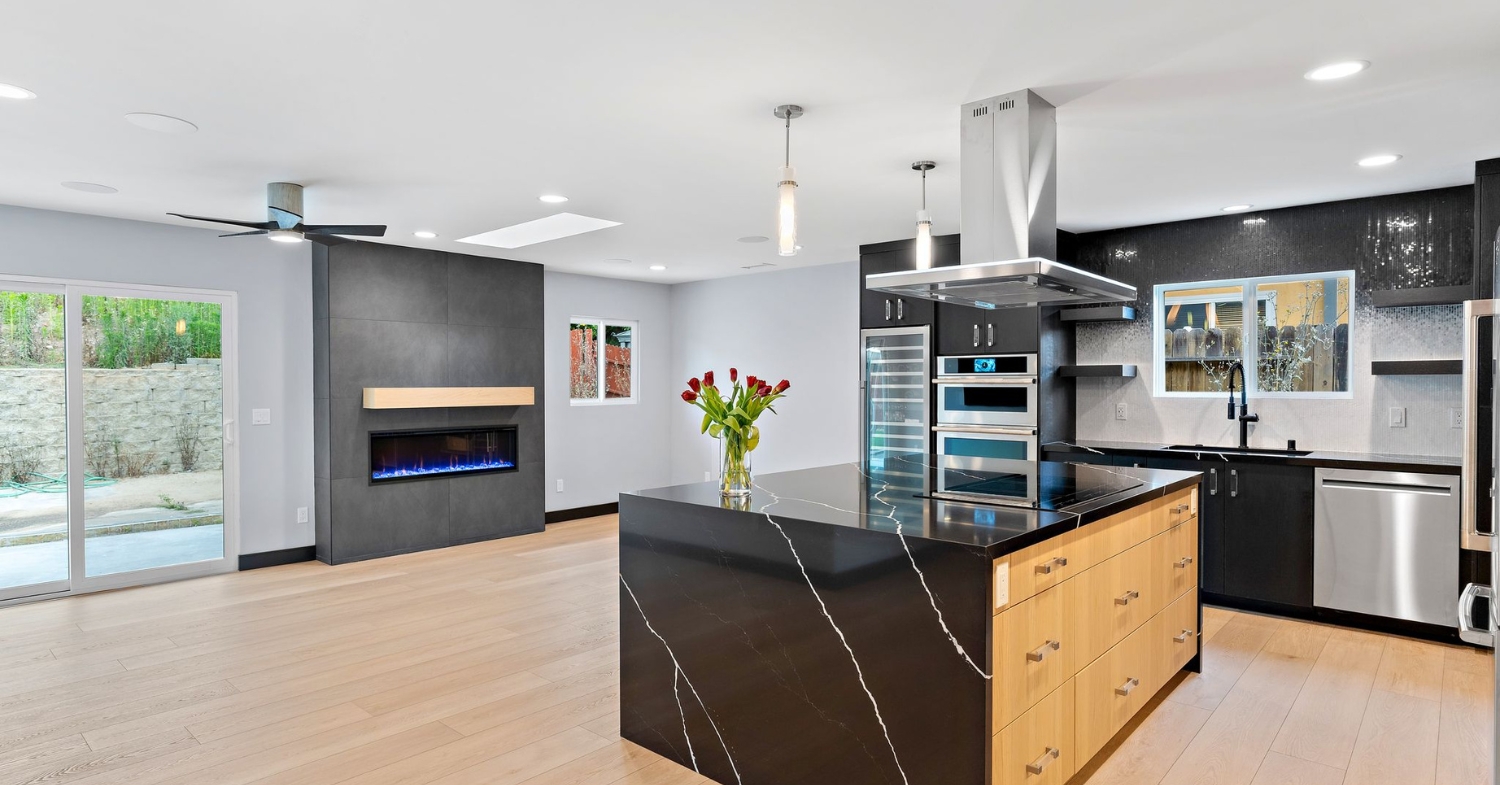
The 30% Rule: Setting Your Home Remodel Budget Ceiling
The 30% rule says never spend more than 30% of your home’s current market value on total renovations. On a $500,000 home, that caps your all-in remodeling budget at $150,000, across every project, not per room.
The logic is straightforward: it protects your equity and keeps you from overcapitalizing a house the local market can’t support. If your $500,000 home suddenly carries $200,000 in renovations, you’ve spent 40% of its value chasing an upgrade the neighborhood’s comparable sales won’t validate at resale.
Good budget planning starts here, before you pick a single finish or call a single contractor. It’s the one number that tells you whether your renovation budget is realistic before you fall in love with a scope you can’t actually support.
Here’s where most advice stops short: the 30% rule is a resale heuristic, not a law. It assumes you’re optimizing for what a future buyer will pay. If you’re staying in the house for 15 more years, the math changes. Personal utility from a remodel you actually use every day can legitimately outweigh a rule built to protect resale value you won’t realize for over a decade. Every guide we found treats 30% as gospel. It’s a ceiling for sellers, not a floor for anyone who plans to stay.
How to Budget by Room: Kitchen, Bathroom, and Beyond
A kitchen renovation should run 5% to 15% of your home’s total value, though the recommends 15% to 20% for a comprehensive overhaul. A bathroom renovation runs narrower, typically 5% to 10% of home value, with some industry guidance tightening that to 3% to 7% for a single bathroom remodel.
The average cost of renovating either room varies widely, depending on the size of the space and depending on the scope of work, but these percentages give you a starting ceiling before you get quotes.
Those percentages tell you the ceiling. What they don’t tell you is where the money inside that ceiling actually goes. The NKBA’s own line-item breakdown for a kitchen looks like this:
| Category | Share of Kitchen Budget |
|---|---|
| Cabinets and hardware | 29–30% |
| Labor and installation | 17% |
| Appliances and ventilation | 14% |
| Countertops | 10–11% |
| Flooring | 7% |
| Lighting | 5% |
| Walls and ceilings | 5% |
| Design fees | 4% |
| Doors and windows | 4% |
| Faucets and plumbing | 4% |
| Miscellaneous | 1% |
In coastal labor markets like San Diego, those national percentages skew. Higher trade wages push labor to 25–35% of the kitchen budget instead of 17%, and cabinets can run 29–40% depending on whether you’re in stock, semi-custom, or fully custom territory. If a bid from a San Diego contractor shows labor at 15%, look closer. Either the scope is smaller than it looks, or the number is soft.
Zoom out to a whole-home renovation project and the allocation shifts again, since a full home involves rooms that don’t carry the same per-square-foot intensity as a kitchen:
| Category | Share of Total Budget |
|---|---|
| Kitchen | 30–40% |
| Bathrooms | 15–25% |
| Living areas | 15–20% |
| Storage and cabinetry | 10–15% |
| Contingency | 10–15% |
Whichever room you’re weighing, the same question comes first: what’s the total budget you can justify against your home’s value, before you split it between kitchen or bathroom, storage, and contingency? Smaller rooms deserve the same discipline. A laundry room makeover, a fresh coat of paint through the main living areas, or swapping a tub for a walk-in shower all carry their own realistic price bands, and skipping the math on those “small” projects is how budgets quietly creep. If you’re focused on a kitchen or bathroom renovation specifically, our breaks down San Diego pricing by scope and finish level in more depth than fits here.
Over-Improving Your Home: When Your Remodel Budget Backfires
Over-improvement, sometimes called overcapitalization, means putting more money into a property than its neighborhood can support. It’s the single most common way homeowners lose money on a remodel, and it has nothing to do with taste. It’s entirely about home value relative to the street you live on.
Finding your ceiling starts with research, not guesswork. Pull the highest comparable sales within a half-mile, or 2 to 3 blocks in denser neighborhoods. Your post-renovation value shouldn’t exceed that ceiling by more than 5% to 10%. Homes rarely sell for more than 10% to 15% above the highest local comp, no matter how good the renovation is.
Here’s the mechanism nobody explains clearly: appraisers are constrained by comps, full stop. If you put a $100,000 kitchen into a $300,000 home in a neighborhood where nothing comparable has sold above $320,000, the appraiser cannot find data to support your investment. The result is an appraisal gap: the home appraises below what you spent, and the lender won’t finance the difference. You end up carrying the gap in cash or losing it at resale.
This is the mechanism that actually protects or erodes property value, more than any single finish choice. Appraisers also assign condition ratings (C1 through C6) and quality ratings (Q1 through Q6) that quietly determine which comps get selected for your file. Moving a home from a C4 to a C3 rating, or a Q4 to a Q3, changes the pool of properties the appraiser compares you against, and that’s often where a well-planned remodel pays off most. A rough rule of thumb we use with San Diego clients: keep kitchen spend under 10% of your target sale price, and check your neighborhood ceiling before you finalize scope, not after.

The Upgrades That Shrink Your Buyer Pool
Some renovations don’t just fail to add value. They actively narrow who wants to buy the house. A few patterns show up again and again:
- Removing bedrooms or closets to expand a primary suite. Bedroom count is a hard metric for both buyers and appraisers, and losing one hurts more than a bigger closet helps.
- Highly personalized kitchens — bold tile patterns, open shelving, commercial-grade ranges. They photograph well for you and poorly for resale.
- Niche luxury additions: built-in saunas, tiered home theater seating, elaborate wine cellars, wet bars. Small buyer pool, expensive to build, hard to recoup.
- Built-in home offices that can’t convert back to a bedroom. Most buyers want flexibility more than a dedicated desk nook.
- Swimming pools, which recoup only 30% to 50% of cost and can actively deter buyers with young children over maintenance and liability concerns.
The ROI data backs this up starkly. According to the 2025 Cost vs. Value Report, an upscale major kitchen remodel recoups only 32.7% to 36%, an upscale bathroom addition recoups 28.4%, and an upscale primary suite addition lands around 15%. Compare that to a minor kitchen remodel at 112.9% and the gap isn’t subtle.
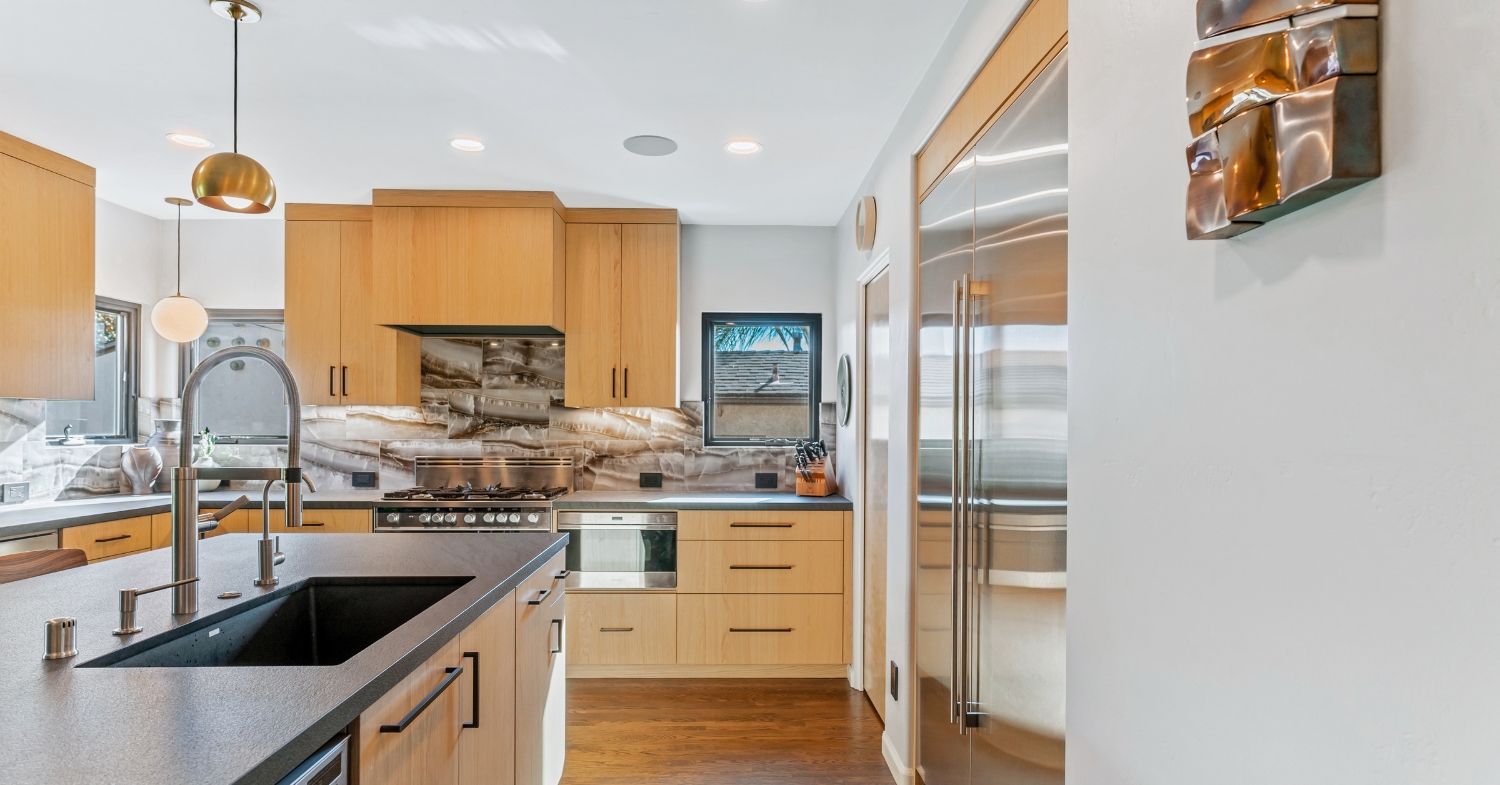
Where to Spend Your Remodel Budget, and Where to Save
Some of the highest-return renovations aren’t glamorous. The 2025 Cost vs. Value Report puts garage door replacement at 267.7% cost recouped, steel entry door replacement at 216.4%, and manufactured stone veneer at 207.9%. Fiber-cement siding recoups 113.7%, and a minor kitchen remodel comes in at 112.9%.
San Diego’s local ROI runs even more favorable in a few specific categories. ADUs typically recoup 100% to 150% once you factor in rental income and the property value lift. Drought-tolerant landscaping recoups 100% or more, driven by rebates and lower water bills. Outdoor living spaces recoup 80% to 100%, which tracks with San Diego’s 260-plus sunny days a year, and minor-to-mid kitchen work lands at 75% to 85% locally.
The real lesson underneath these numbers: high-quality mid-range materials consistently beat ultra-luxury ones on cost per dollar of value. Large-format porcelain tile that reads as Carrara marble runs $4 to $8 per square foot, versus $15 to $30 for the real stone, and it’s harder, less porous, and needs no sealing. Quartz over natural marble, semi-custom cabinets over fully custom, both follow the same logic.
That said, cheap materials aren’t a shortcut, they’re a different trap. DIY work without permits, corner-cut finishes, and bargain-bin fixtures are documented value killers, not real saving. Appraisers score quality ratings directly, and a poorly executed installation depreciates faster than it saves you upfront.
Cost estimates from general contractors typically break a project into materials and labor separately, and labor costs are where San Diego bids diverge most from national averages. Getting firm cost estimates before you finalize a scope of the project is what actually keeps a home improvement project on budget, more than any single material choice. Ask any contractor how much a renovation might cost across two or three finish tiers before you commit, since costs can vary significantly depending on the materials you choose and the scale of the project.
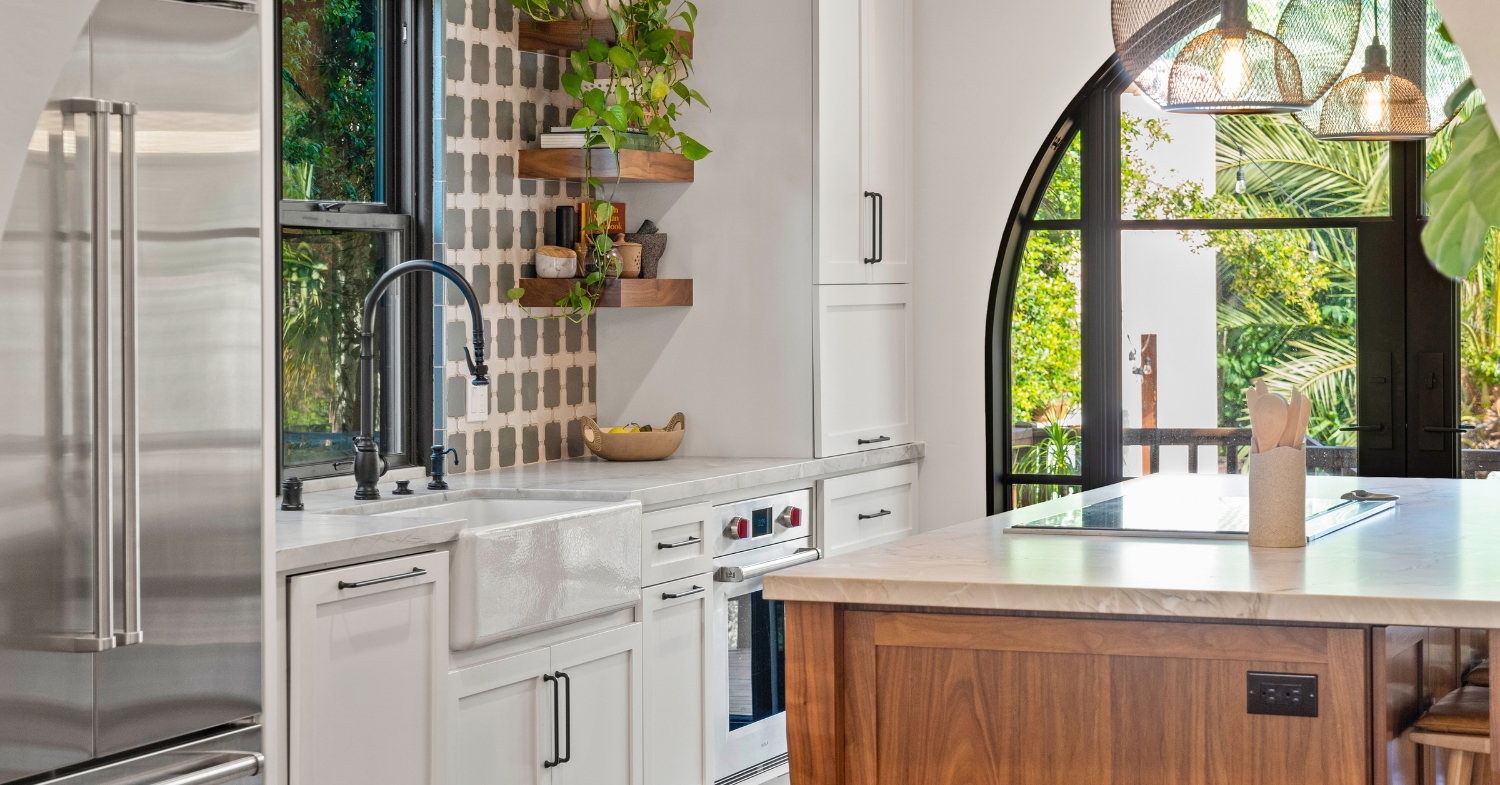
When a Remodel Is Worth It Even If It Doesn’t Pay Back
Cost vs. Value data measures return on investment at resale, not how much you’ll enjoy the space day to day. If you’re not selling anytime soon, that scoreboard is measuring the wrong thing.
The 2025 Cost vs. Value Report itself makes this distinction: exterior projects tend to drive the most value for owners who are selling, while interior renovation projects make more sense for homeowners planning to stay for years. A primary suite remodel, for instance, might return only 54% to 60% at resale. If you’re the one using that suite every night for the next decade, the return on your investment isn’t measured in resale dollars at all, it’s measured in how much you actually use the space.
This is the honest version of “when to splurge”: splurge on what you’ll use daily, not on what you think a future buyer wants. Just don’t confuse a lifestyle investment with a financial one when you’re setting a realistic remodeling budget in the first place.

How Much Contingency Should You Add to Your Remodel Budget?
Reserve 10% to 20% of your total budget for a standard home, and push that to 20% to 30% if your home was built before 1980. Treat this reserve as separate from your budget friendly finish choices; it exists to cover renovation expenses nobody can see until the walls are open, not to pad the line items you can already price.
An older home carries real, well-documented risk once demolition starts. Cast-iron pipes that look fine from the outside, knob-and-tube wiring behind a wall, asbestos in old flooring adhesive, foundation settling nobody flagged at inspection. Each of those turns into unexpected expenses and additional costs that a thin contingency won’t cover, and they’re exactly what causes a project to go over budget partway through.
San Diego’s housing stock skews older in exactly the neighborhoods where remodeling activity is highest, which is why this isn’t a hypothetical. We’ve written more on , including which conditions show up most often once walls come down.
How to Finance Your Remodel Budget in 2026
Most homeowners finance a remodel with home equity, and rates vary meaningfully by product and by state. As of July 2026:
| Financing Option | Rate |
|---|---|
| HELOC, national average | 7.44% |
| HELOC, California average | 7.31% |
| HELOC, CA credit unions (variable) | from 6.75% |
| Home equity loan, 5-year | 8.10% |
| Home equity loan, 10-year | 8.25% |
| Home equity loan, 15-year | 8.22% |
| Home equity loan, 15-year fixed (CA) | ~6.97% |
| Personal loan (700+ FICO) | 8–14% |
Rates move weekly, so treat this table as a snapshot rather than a quote. Check and before you commit to a lender. If you’re weighing your financing options, we’ve laid out in more detail, including what lenders actually look for and how personal loans compare to tapping home equity.
Whichever route you take, don’t let a home renovation cost estimate live only in your head. A simple worksheet or budget spreadsheet is what actually helps you stay on budget once demolition starts and change orders start showing up. Track your total project costs against the estimate weekly, not at the end, and treat any mortgage or home equity paperwork as part of the same plan rather than an afterthought.
One California-specific wrinkle worth knowing before you add square footage: under , your existing assessment stays protected, but any newly added square footage gets reassessed at current market value, permanently raising that portion of your property tax bill.
How to Budget With a Contractor Instead of Guessing
The biggest budgeting failure isn’t picking the wrong percentage. It’s pricing a home renovation project with an architect, discovering the contractor bids come in 20% over what the plans assumed, and paying to redesign before construction even starts.
A design-build approach prices design, labor, and materials as one contract before you commit, which is what actually prevents that scenario rather than just warning you about it. It’s also how we make sure a client’s home remodeling budget matches their neighborhood ceiling and their actual priorities, not just a generic percentage rule. If you want to see exactly what should be itemized in a real estimate before you sign anything, we’ve broken it down in .
Not sure a remodel is even the right move versus buying up? We cover that decision separately in .
Get Help Setting a Realistic Remodel Budget
Every percentage in this guide is a starting point, not a verdict on your specific house. Remodel costs vary enough between two houses on the same street that a generic online number rarely holds up, and the cost of your renovation ultimately comes down to your neighborhood’s comparable sales, your home’s age, and what you actually plan to do with the space over the next decade.
Setting a real budget for your renovation before you call a contractor, not after the first bid comes back, is what separates a remodel project that stays on track from one that doesn’t. Most remodels typically cost more than the first number a homeowner has in mind, which is exactly why the percentages above exist.
Lars Remodeling & Design has been helping San Diego homeowners set realistic remodel budgets for over 35 years, as a design-build firm where pricing gets validated during design instead of after you’ve already committed to a set of plans.
and we’ll walk through your neighborhood’s ceiling, your priorities, and a real number before you spend a dollar on demolition. You can also explore our kitchen remodeling work to see how integrated pricing actually works.
Renovation ROI figures reflect the 2025 Cost vs. Value Report and San Diego–market adjustments as of July 2026. Financing rates change weekly; verify current rates before making a decision. Cost and rate figures should be re-verified periodically.