What Home Improvements Increase Property Taxes in San Diego?
01.

- Share this article
-

-

-

-

-

-

General information, not tax advice. Confirm with a CPA or the San Diego County Assessor.
In San Diego County, home improvements increase property taxes only when they count as new construction: added square footage, an ADU, a pool, or a renovation complete enough to make a kitchen, bath or house substantially new. Pulling a building permit doesn’t raise your taxes by itself. Under Proposition 13, the market value of the new work is added to your existing assessed value, and the rest of your home keeps its current base.
Key takeaways
- A permit alerts the County; it doesn’t set the tax. Every building permit is sent to the Assessor, who sorts repairs from new construction.
- Only the new value is added. A 500 sq ft family room is reassessed; the existing 2,000 sq ft home is not.
- Routine maintenance usually doesn’t count. Replacing a roof, replumbing, rewiring or replacing a deck normally won’t raise property taxes.
- An ADU is new construction. In the City of San Diego, each $100,000 of added value adds about $1,250 to the annual tax bill at the most common FY 2025-26 rate.
- Expect a supplemental tax bill. It arrives separately after completion and isn’t sent to your lender.
Do pulling permits increase property taxes?
No. The permit is how the County finds out about the work, not what raises the bill. San Diego County receives copies of all building permits issued by the cities and the County, then splits them into permits for repair, replacement and maintenance and permits for actual new construction. Its own FAQ answers “Will all building permits cause a reappraisal?” with a plain “No.”
Skipping the permit doesn’t avoid the tax either. The State Board of Equalization (BOE) says new construction must be valued even without a permit, and it can be found through aerial imagery, field inspections and property sales records. Unpermitted work can also complicate a sale or refinance, so it rarely saves money.
How Prop 13 reassessment affects your property taxes after a renovation
Proposition 13 sets your home’s taxable value at its market value when you bought it (the base year value). After that, it can grow by no more than 2% a year. Only a change in ownership or new construction resets it, and new construction resets only the part that is new:
Existing Prop 13 value + market value of the new construction = new assessed value.
The new portion gets its own base year value and also grows by no more than 2% a year. A longtime owner whose house is assessed at $500,000 but worth $1.4 million doesn’t lose that gap by building an addition. If the project adds $250,000 of value, the new property tax assessment is about $750,000, not the full $1.65 million.
The base tax rate is 1% of assessed value. Voter-approved bonds and special charges are added on top, so your rate depends on your tax rate area. In fiscal year 2025-26, most tax rate areas in San Diego County fell between about 1.06% and 1.19%, and the most common City of San Diego rate was 1.25114%, according to the County Auditor & Controller.
Home improvements that increase property taxes
The BOE defines new construction as an addition to land or improvements, or an alteration that amounts to a major rehabilitation or a change of use. These major improvements usually lead to higher property taxes:
| Home improvement | Why it’s assessable |
|---|---|
| Room or home addition | Adds livable square footage |
| ADU (attached or detached) | Adds a new dwelling unit |
| Converting your garage, attic or basement to living space | Changes the space to a new use |
| Pool, spa, new patio or new deck | A new improvement that didn’t exist before |
| Complete kitchen or bath remodel with new, upgraded fixtures and appliances | Can count when the room becomes substantially new |
| Whole-house renovation down to the studs | Major rehabilitation, equivalent to new |
| Adding plumbing or electrical capacity | Expands the system rather than replacing it |
Improvements that usually count as new construction · BOE and San Diego County guidance (checked October 2026)
Improvements that won’t affect your property taxes, and property tax exemptions
Routine maintenance generally isn’t taxed as an improvement, even when it improves curb appeal or home value. San Diego County lists a new roof, replumbing, rewiring and replacing an old fence or decking. The BOE adds painting, new carpet, HVAC replacement, new windows, swapping an old fixture for a modern one, and repairing dry rot or termite damage.
One nuance: like-for-like rewiring is maintenance, but the BOE lists upgrading the capacity of plumbing or electrical systems, such as a bigger panel and new circuits for a remodeled kitchen, as new construction. Each improvement is judged on its whole scope.
Some projects are excluded from new construction rules, often called a property tax exemption. San Diego County names remodels for earthquake safety, fire protection, soundproofing and accommodating a permanently disabled owner. The BOE exclusion list also covers fire sprinkler systems and active solar energy systems (under current law, solar must be in place before January 1, 2027). Several exclusions need a claim form, so ask about it before work starts.
Kitchen and bathroom remodels: repair or “substantially new”?
This is the gray area, decided case by case. Replacing a worn faucet, toilet, countertop or flooring is replacement. A complete kitchen remodel or a full bathroom remodel with new, upgraded fixtures and appliances can be enrolled as new construction. The County sets the added value from total construction cost and recent sales of similar homes with the same kind of upgrade nearby.
Moving walls, enlarging the room, adding plumbing or electrical capacity and upgrading materials make reassessment more likely. A mostly cosmetic improvement inside the existing footprint is much less likely to change your assessment.
Will an ADU increase your property taxes?
Yes, but not the way many property owners fear. Building an ADU in California does not reassess your whole property. The ADU is valued as new construction and added to your existing assessed value, while your house and land keep their Prop 13 base.
The tax follows value added, not the permit valuation
- Construction cost: what you pay to design and build. Our San Diego ADU cost guide shows a detached ADU at $250,000–$450,000+.
- Permit valuation: the City’s formula for fees. Information Bulletin 101 (January 2024) values typical wood-frame residential space at $165.67 per square foot, so an 800 sq ft ADU is valued at about $132,500 for fees. That isn’t your taxable value.
- Value added: the appraised value of what the ADU contributes. This is the number that’s taxed.
San Diego County says value added is usually the full construction cost. It can be lower for an over-improvement for the area, or higher when an owner built the work for much less than the value it created.
How much will property taxes go up after an ADU?
We found no agency that publishes an average ADU tax increase, and we don’t track clients’ assessments. The table below uses our published cost ranges as a stand-in for value added, at two FY 2025-26 rates. These are planning scenarios, not County averages.
| ADU type | Lars cost range | Added tax per year at 1.10% | Added tax per year at 1.25% |
|---|---|---|---|
| Garage conversion | $150,000–$225,000+ | $1,650–$2,475+ | $1,875–$2,813+ |
| Attached ADU | $200,000–$350,000+ | $2,200–$3,850+ | $2,500–$4,375+ |
| Detached ADU | $250,000–$450,000+ | $2,750–$4,950+ | $3,125–$5,625+ |
ADU property tax planning scenarios · Lars ADU cost ranges (checked October 2026) · FY 2025-26 County tax rates
A junior ADU built inside existing living space may add less value than it costs, because that square footage was already on the roll.
Rental income and selling an ADU separately
Rent from an ADU is reported on your income tax return, not your property tax bill.
AB 1033 lets cities and counties allow ADUs to be sold separately as condominiums. The County of San Diego adopted it for unincorporated areas, effective April 4, 2026; cities decide for themselves. Selling the ADU separately is a change in ownership: the ADU and its share of the lot get a new base year value at market value, usually the sale price, while the home you keep doesn’t. Planning one? Start with our San Diego ADU builders page and the ADU requirements and permits guide.
Room additions and property taxes
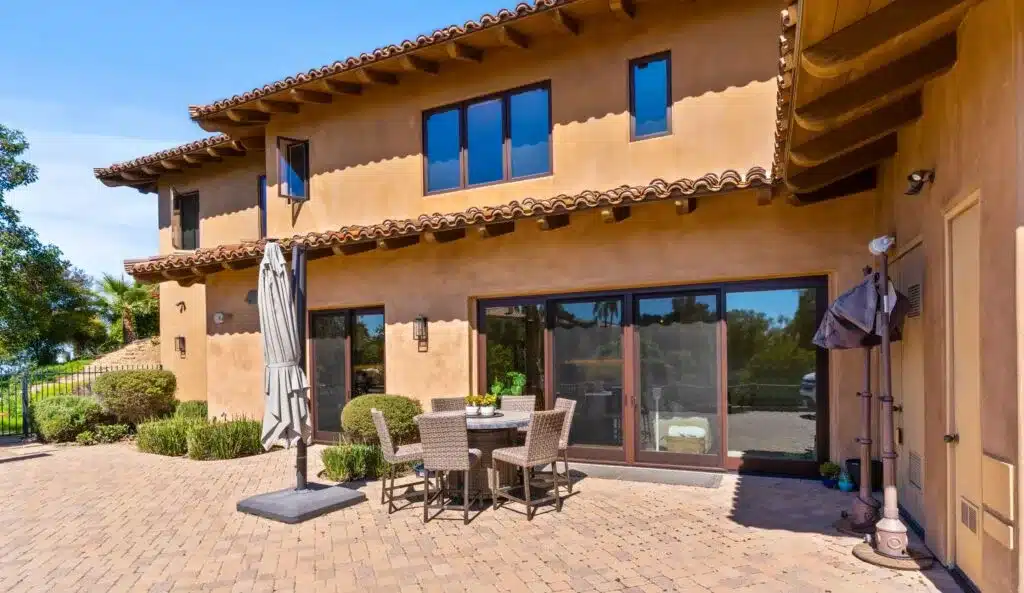
When you add square footage, only the addition is reassessed. San Diego County’s example: an owner of a 2,000 sq ft house builds a 500 sq ft family room, and under Prop 13 only the family room is reassessed. The same rule applies to a primary suite, a bump-out or a second story.
Our room addition cost guide lists $150,000–$250,000+ for a single room and $275,000–$400,000+ for a primary suite. If value added matched cost, the increase at 1.25% would be about $1,875–$3,125+ a year for a single room and $3,440–$5,000+ for a primary suite. Our home additions team can help you weigh scope and budget.
Worked example: how an ADU changes the property tax bill
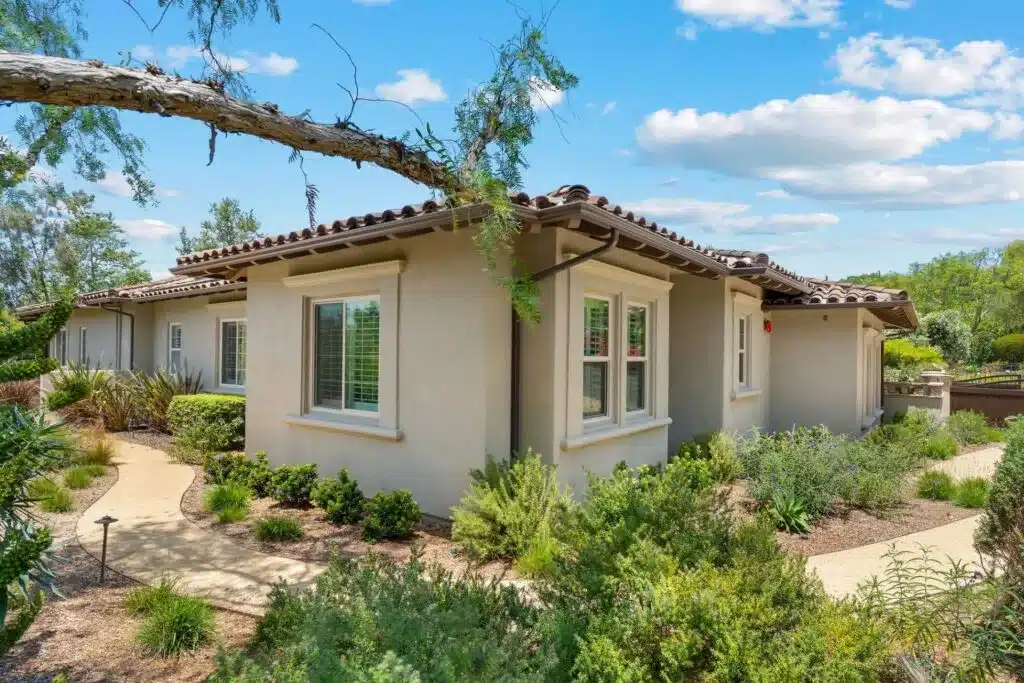
Say your home’s assessed value is $650,000. You complete an 800 sq ft detached ADU, started after January 1, on October 15, and it’s found to add $300,000 of value. Your parcel is at 1.25114%, the most common City of San Diego rate for FY 2025-26.
| Item | Before ADU | After ADU | Change |
|---|---|---|---|
| Existing assessed value | $650,000 | $650,000 | $0 |
| ADU base year value | $0 | $300,000 | +$300,000 |
| Total assessed value | $650,000 | $950,000 | +$300,000 |
| Annual tax bill at 1.25114% | $8,132.41 | $11,885.83 | +$3,753.42 a year |
| First supplemental bill (Nov. 1–June 30) | n/a | $2,502.28 | 8/12 of the annual increase |
Worked example · Illustrative figures; FY 2025-26 rate from the San Diego County Auditor & Controller (Table 27)
The new value takes effect on the first day of the month after completion, so the first supplemental bill covers November through June: $3,753.42 × 8/12 = $2,502.28. After that, the ADU is simply part of your regular bill. Fixed charges on the bill don’t change with value and aren’t included.
San Diego County Assessor process and timing
- The permit reaches the Assessor. The work is classified as repair or new construction.
- A questionnaire may arrive. For remodels, the owner is asked for the cost of construction and the size of the addition. Keep your contract and invoices.
- January 1 appraisal if work is unfinished. Only the unfinished new work is valued, mainly from construction costs. You’ll get a Notification of Value, but no supplemental bill until completion.
- Completion. Work is complete when it’s available for use, usually at final inspection.
- Supplemental bill. The difference between the old and new value is prorated through June 30 and billed separately from your annual bill. It isn’t sent to your lender. Finish between January 1 and May 31 and you’ll get two supplemental bills.
To estimate it early, use the Assessor’s supplemental tax calculator or call (858) 505-6262.
How to appeal a property tax increase after a renovation
If the new value looks too high, call the Assessor’s office and talk with the appraiser first. Some disagreements end there once you share your actual costs. If not, file an Application for Changed Assessment with the Clerk of the Assessment Appeals Board:
- Supplemental assessment: within 60 days of the mailing date on the supplemental tax bill.
- Regular annual assessment: between July 2 and November 30.
- Evidence: comparable sales, an appraisal and your construction costs. Keep paying while the appeal is pending; overpayments are refunded.
Are home renovations tax deductible?
Usually not in the year you pay for them, but renovating your home can still lower taxes later:
- Capital improvements raise your cost basis. Additions, ADUs, new systems and major remodels that add value or extend the home’s life are added to your basis, which can reduce capital gains tax when you sell. Repairs like patching a leak don’t count.
- Medically necessary changes may be deductible. Ramps, wider doorways and accessible bathrooms can count as itemized medical expenses, deductible above 7.5% of your adjusted gross income, to the extent they don’t raise the home’s value.
- Rental space follows different rules. Repairs to a rented ADU may be deductible, and improvements are generally depreciated.
- Federal home energy credits have ended. The IRS says the home improvement credit isn’t allowed for property placed in service after December 31, 2025, and the residential clean energy credit isn’t allowed for expenditures after that date.
Keep every contract, invoice and permit record together, and ask a CPA what applies to your return.
Frequently asked questions
Do all home improvements increase property taxes?
No. Only new construction is added to your assessed value. Repairs, replacements and routine maintenance generally aren’t, even when they require a permit.
Does a new roof increase property taxes in San Diego?
Usually not. The County treats replacing a roof as repair work that normally doesn’t trigger a reassessment.
Do I have to report home improvements?
Usually not. The permit reaches the Assessor, who may mail you a questionnaire. Answer it when it arrives.
Does solar increase property taxes in California?
Under current law, a qualifying active solar energy system in place before January 1, 2027 is excluded from new construction assessment, so it doesn’t raise your assessed value. A pending bill could extend that date; confirm before you install.
Will landscaping or a new patio raise property taxes?
Planting and routine landscaping usually aren’t treated as new construction. A new patio, deck, pool or spa is new construction and can be assessed.
How can I minimize property tax increases after renovations?
Keep accurate cost records, ask about exclusion claim forms before work starts, and appeal within the deadline if the value is wrong. Don’t skip permits; unpermitted work can still be assessed.
Plan your project with the tax picture in view
A higher property tax bill is part of the cost of adding space, not a reason to skip a project that fits your family. Lars Remodeling & Design has designed and built additions and ADUs across San Diego County since 1991, with realistic budgets from the first meeting. Schedule a consultation to talk through your plans.